
Namibia has improved its budget transparency, but the country still falls below the international standard needed to ensure citizens can fully understand and influence how public money is spent, according to the latest Open Budget Survey.
The survey, released by the International Budget Partnership (IBP) and discussed during a meeting between government and civil society organisations in Windhoek last week, found that Namibia has made progress in opening its budget process, but still has work to do to strengthen public participation and oversight.
The national budget affects almost every aspect of people’s lives, from schools and hospitals to roads, pensions, drought relief and other public services. If citizens do not know how public money is raised, allocated and spent, it becomes difficult to hold government accountable.
Namibia scored 53 out of 100 for budget transparency, 17 out of 100 for public participation and 48 out of 100 for budget oversight.
The transparency score remains below the international benchmark of 61, the level considered sufficient for citizens to properly understand and debate government spending.
The figures show that while government is publishing more budget information than before, ordinary Namibians still have limited opportunities to influence decisions on national spending priorities.
The Institute for Public Policy Research (IPPR) said Namibia’s transparency score has moved up and down over the past decade but has remained in the moderate range.
The country’s score dropped in 2021 after delays in publishing important budget documents, including the Year-End Report, before improving again as government released more fiscal information.
The survey identified public participation as Namibia’s weakest area.
With a score of just 17 out of 100, citizens have few opportunities to contribute to decisions on how public money should be spent.
Parliament’s oversight score of 48 out of 100 also suggests there is room to strengthen scrutiny of government spending.
The survey also compared Namibia with neighbouring countries.
South Africa scored 82 out of 100, making it one of Africa’s strongest performers on budget transparency. Botswana scored 34, while Zambia scored 38. Namibia performed better than Botswana and Zambia but remained well behind South Africa.
According to the IPPR, South Africa’s stronger performance is supported by stronger parliamentary oversight, a Parliamentary Budget Office and established systems that allow citizens to participate in the budget process.
“The report says Namibia could strengthen its own budget system by adopting similar reforms, including creating stronger opportunities for public participation and improving Parliament’s ability to scrutinise government spending,” the IPPR said.
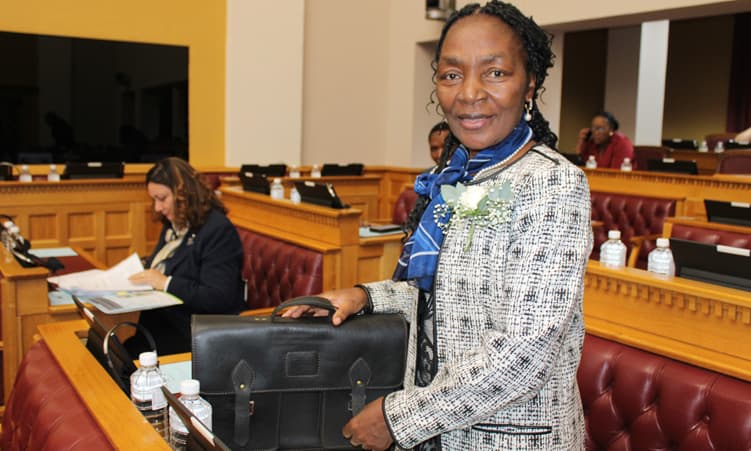
Finance minister Ericah Shafudah said government welcomed the survey and viewed it as an opportunity to improve.
“We value this assessment as an instrument for identifying areas requiring improvement and strengthening our public financial management systems,” she said.
She acknowledged that more could be done.
“We welcome the findings and look forward to an open and constructive dialogue on the outcomes, including areas where progress has been made and those requiring further improvement,” Shafudah said.
The minister added that government would continue working with civil society to improve transparency and accountability.
“As Government, we remain open to constructive feedback and practical recommendations that will assist us in strengthening transparency, accountability and meaningful public participation in the national budget process,” she said.
The survey concludes that while Namibia has made progress in making budget information more accessible, improving public participation and strengthening parliamentary oversight remain key areas for further reform.
-pmukokobi@nepc.com.na

Comments
No comments yet. Be the first to share your thoughts.