
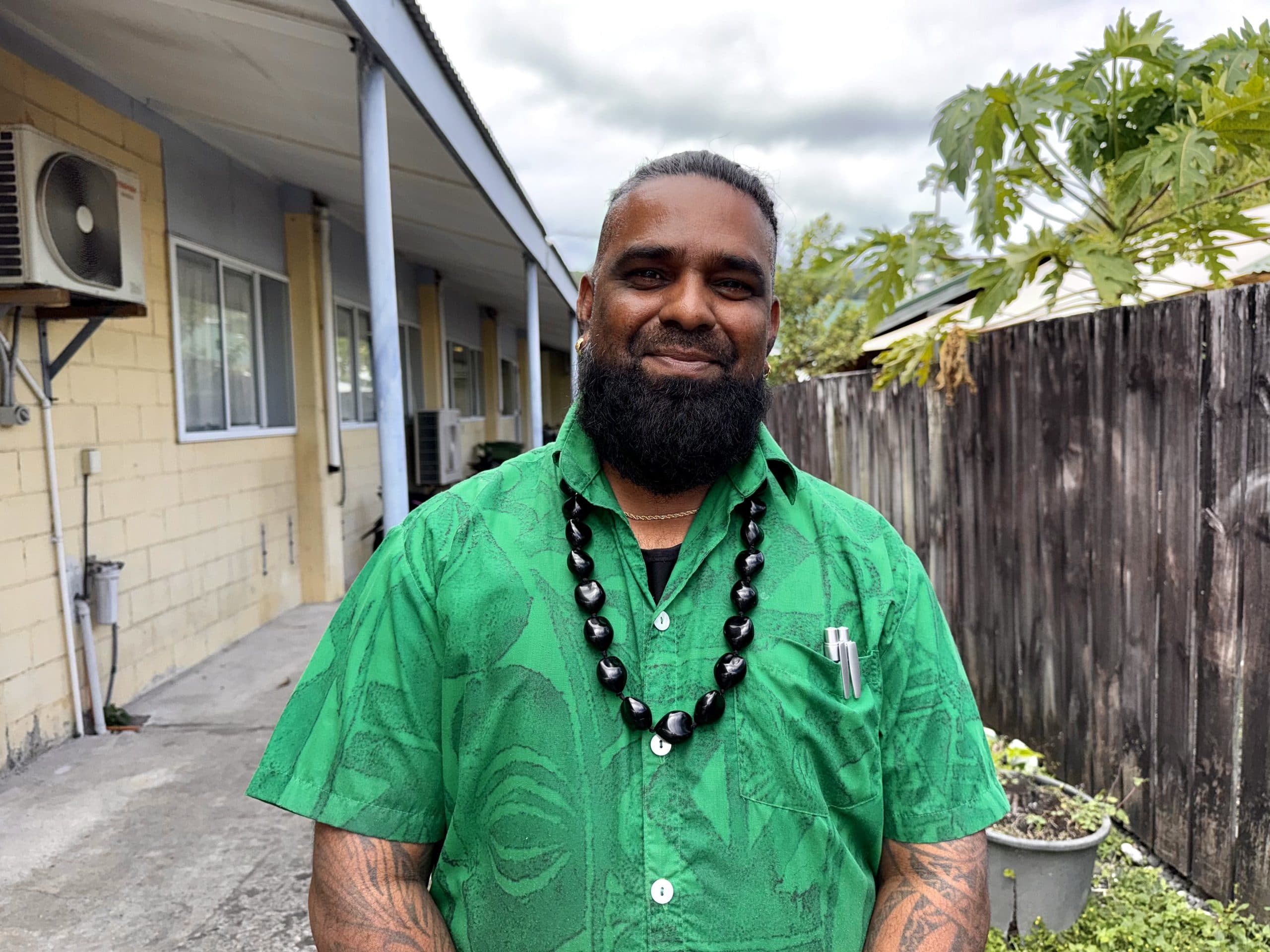
Leelesh Chandar, a naturalised Cook Islander, is no stranger to families. He has been a mortician in Rarotonga for some time now. It was more than eight years ago when the thought of having a crematorium in the Cook Islands first came to him.
At that time, he was thinking of foreign workers who had difficulties laying their loved ones to rest because of a lack of land and the high cost associated with sending their bodies back to their home countries.
“We all know that availability of land for burials has been a major issue even for Cook Islanders. Initially, I was thinking of foreign workers, but over the years, I have started to believe that this is the way forward when it comes to final rites,” Chandar explained.
“When we farewell our loved ones, it has to be done with dignity, and cremations could be beneficial. It not only solves the land issue but also provides an environmental solution. Many of our cemeteries are facing the impact of climate change, with rising sea levels inundating many areas.”
Chandar has registered a non-profit organisation called Rarotonga Cremation Services. The reason behind this is not to make a profit but to allow people to carry out the final rites of their loved ones at affordable prices.
“I do not want to make a profit with this service. Once set up, people will only pay for the cost associated with the process. For example, the gas usage. The use of the chapel space and other equipment will either be free or, at a minimum, to cover workers’ wages, but otherwise, there is no intention to make a profit,” he said.
The progress so far has been the acquisition of land close to the hospital. Chandar has garnered support from community and church leaders, and he hopes to move to clearing the land, followed by construction. For that to happen, Chandar is hoping to work with aid agencies.
“I have approached donor agencies and they have shown interest. I have made contacts with the company that will provide the equipment. I am also exploring the option of getting a hybrid system where I can convert solar energy for this task,” Chandar added.
On Friday, he met with government officials as he plans the way forward.
The world is steadily moving towards cremation, with global rates rising significantly due to lower costs, space limitations, and changing cultural norms. A basic cremation is typically a fraction of the cost of a traditional casket burial and full funeral home service.
Growing populations and crowded cemeteries have made traditional land burials increasingly impractical or unavailable. Families are more geographically dispersed, making it difficult to maintain a single permanent family gravesite; cremated remains offer flexibility for moving, scattering, or keeping loved ones close. Traditional religious prohibitions against cremation have softened or adapted across many Western and multi-faith societies.
Political Analyst and letter writer William Numanga has stated that not every family will choose cremation because burial is deeply embedded in culture, families and religious traditions and will remain the preference of many Cook Islanders. The issue is simply whether families should also have a choice.
“I have also been told that a number of families on Rarotonga are already choosing cremation, but because the service is unavailable locally, they are sending their deceased relatives to New Zealand to be cremated and then bringing their ashes home,” he wrote in a letter published last week.
Commission the feasibility study. Consult our churches, traditional leaders, funeral providers and communities. Determine how many families are already sending loved ones overseas for cremation. Survey public demand, obtain supplier quotations, identify a possible site and establish the real costs.
“Then put the information before the public. The conversation has started. Now let us determine whether the Cook Islands is ready to provide this choice at home.”
In January of this year, another letter writer stated: “Cremation does not mean abandoning respect, faith or tradition. Many Christian communities around the world accept cremation, recognising that dignity lies in how we honour life, not solely in the method of burial. With thoughtful consultation, churches, traditional leaders and families can shape cremation practices that align with Cook Islands values of respect, family and remembrance.
“A crematorium could be publicly owned, privately operated, or developed as a public–private partnership, with strict environmental and ethical standards. Beyond cost and land savings, it would offer families choice – something that is currently limited.”
While the conversation takes place, Chandar is slowly inching towards giving this option to Cook Islanders.

Comments
No comments yet. Be the first to share your thoughts.