

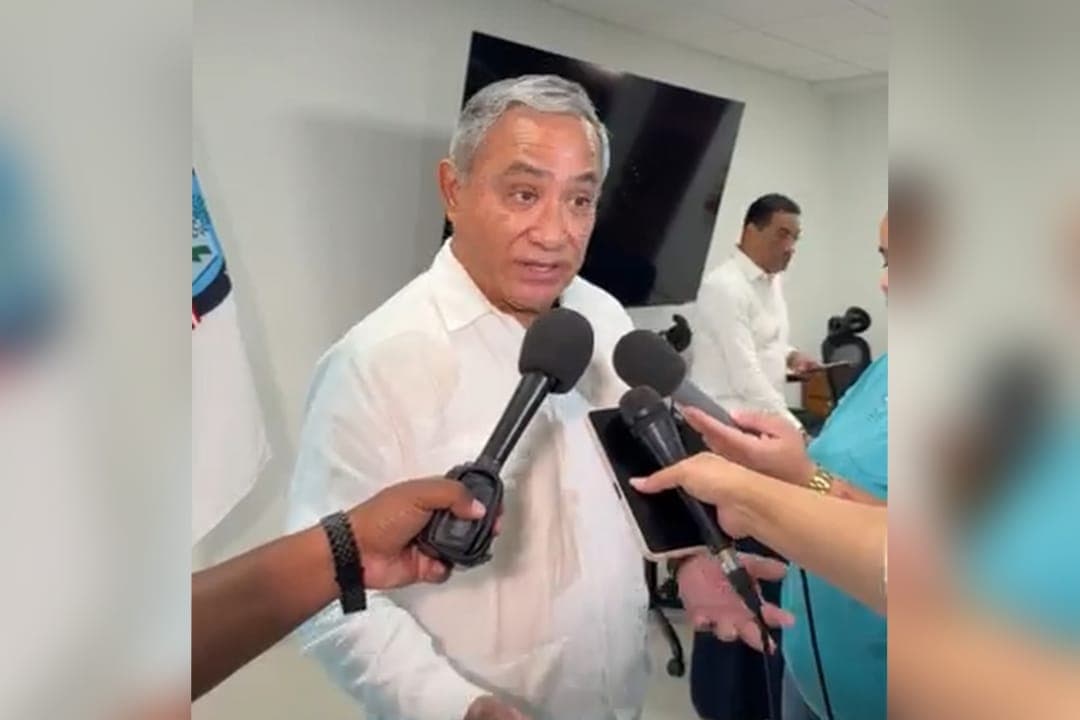
Secretary for the Ministry of Finance and Economic Management (MFEM), Garth Henderson, who sailed aboard the MV Tuitui Moana as a supernumerary from China to the Cook Islands, revealed the plan.
Speaking at the welcoming ceremony for the US$3 million (NZ$5.07m) vessel, co-funded with the People’s Republic of China on August 25, Henderson made it clear that the government stepped directly into domestic shipping to the Pa Enua because it is “an essential service”.
Henderson noted that over the past 15 years, the country has seen seven ships run aground, two young people tragically lost overboard in the last five years and a serious fire last year.
> Cook Islands government assures Taio Shipping new vessel ‘will not compete’
He clarified that this was not a criticism of every private operator or seafarer, but rather proof that the country requires a safer, more reliable and more resilient system.
“MFEM, Ministry of Finance, has led the ship’s, the fleet’s establishment. This is as much an economical and financial challenge as maritime.
“We are not just moving freight. There’s a major economic component to domestic shipping. Costs must be controlled, and some routes will never fully pay for themselves.
“The test, therefore, is whether we deliver a safe, reliable, affordable service at a justifiable cost to government.”
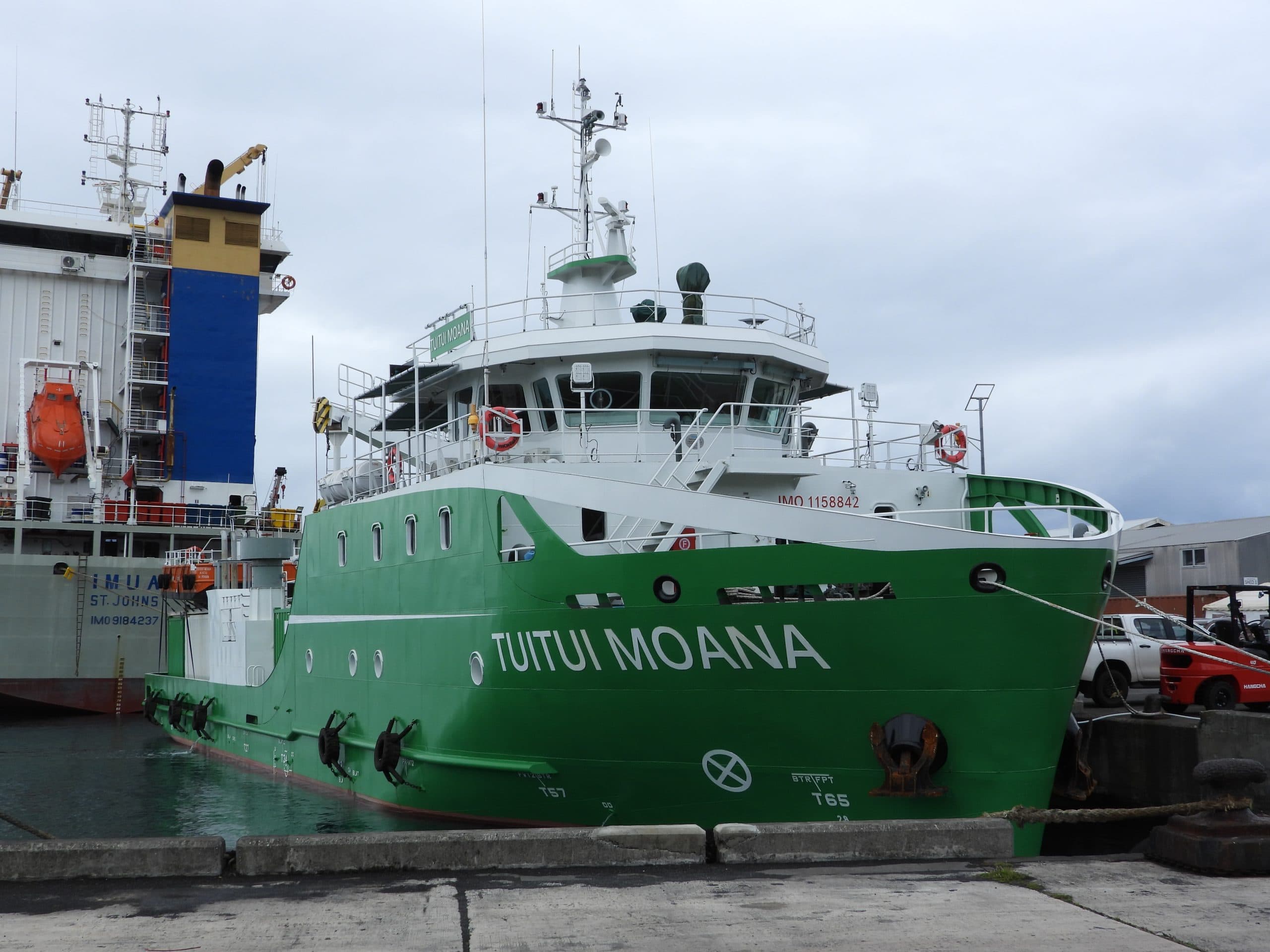
The MV Tuitui Moana was delivered under a 2024 Technical Agreement between the Cook Islands and China. The vessel measures 43.9 metres in length, can carry up to 12 passengers and has a cargo capacity of 100 tonnes.
A second inter-island shipping vessel donated by Japan, named the MV Matakiva, will join the MV Tuitui Moana to service the Pa Enua. Both vessels will be operated by MFEM’s Major Projects and Procurement Support (MPPS) Division.
Henderson said the arrangement with MFEM “is deliberately transitional”.
“For three years, the government will operate the service, build capability, and gather real Cook Islands evidence on cost, demand, crewing, maintenance, and reliability. This is not an assumption that the government shall permanently crowd out the private sector,” he said.
“At the end of the three-year transition period, the government can decide the best long-term model – government operation, an SOE, an attendant service, or a private-to-private public partnership, or a mix.”
Henderson added that this approach allows the government to make decisions from a better-informed position backed by real-time data.
“For this model to succeed, the vessel must be fit for Cook Islands conditions,” he said. “It must be operated by qualified masters, engineers, officers and crew, supported by strong procedures, maintenance and a safety culture that does not compromise under pressure.”
“We need to operate and maintain sustainably.”
He stressed that government ownership must not lead to lower standards, emphasising that these vessels must meet the same maritime requirements as any private operator while the regulator remains independent.
Henderson reiterated that reliable shipping is the economic platform for the Pa Enua.
“It allows growers to reach market, businesses to receive supplies, contractors to move machinery, the government to plan infrastructure, and families to remain connected.
“The return from this fleet will therefore be seen not only in the vessel accounts but also in businesses, construction, produce reaching market and new opportunities in the Pa Enua.”
He added that private sector operators can continue to complement this vital work.

Comments
No comments yet. Be the first to share your thoughts.