
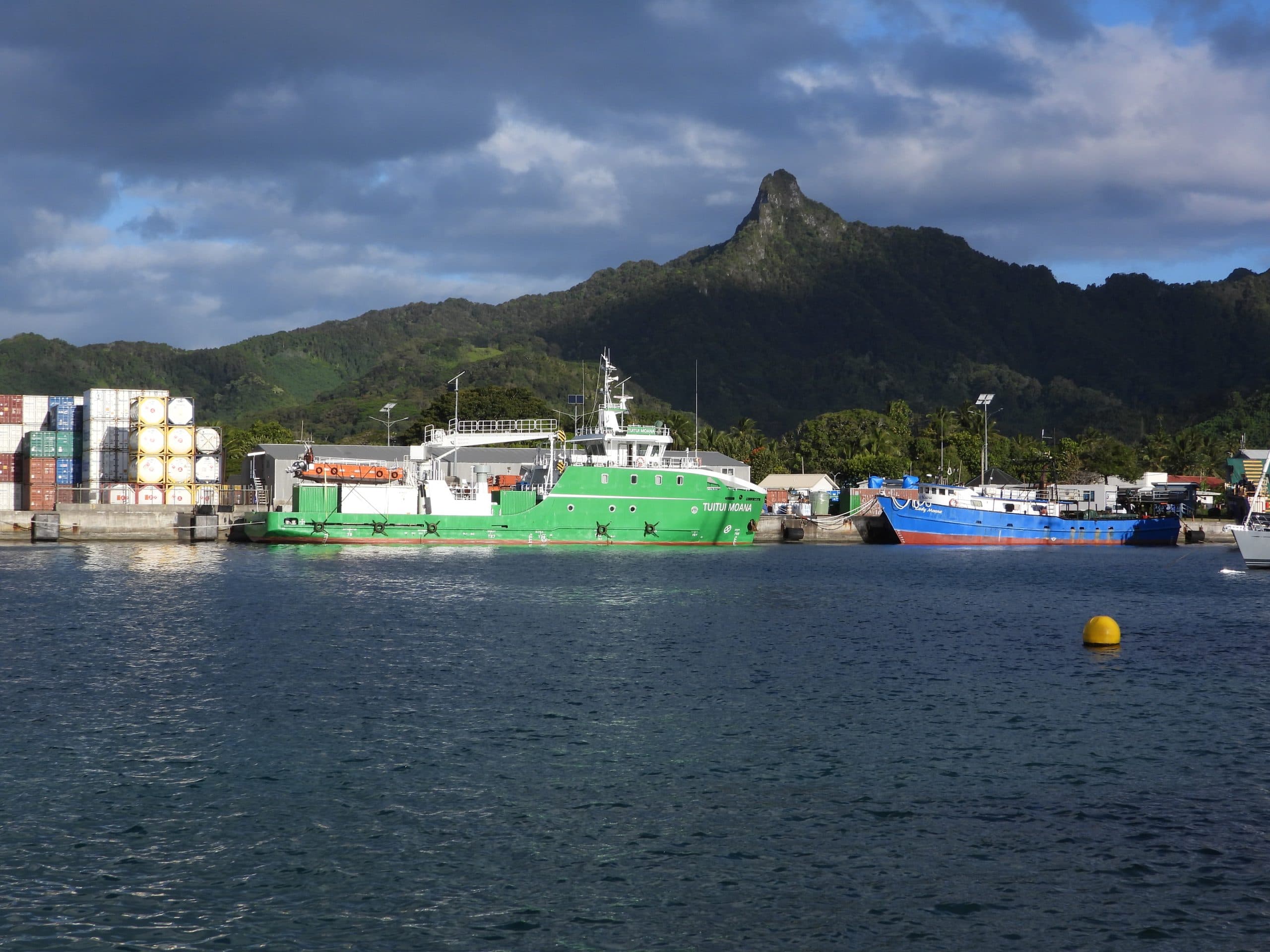
In response to questions from Cook Islands News, the Ministry of Finance and Economic Management’s (MFEM) Major Projects and Procurement Support Division (MPPS), which operates the vessel, said the boat is in its final stages of preparation and is expected to commence service to the Pa Enua in November this year.
“Subject to completion of the remaining compliance requirements, including Maritime Labour Convention certification, the Tuitui Moana is expected to commence service delivery to the Pa Enua in November,” MPPS said.
The Chinese-built, US$3 million MV Tuitui Moana – co-funded by the Chinese and Cook Islands governments – arrived in Rarotonga more than three weeks ago and remains berthed at Avatiu Harbour. It is the first of two vessels delivered under the government’s 2023 Domestic Shipping Roadmap, which aims to improve the reliability, resilience and quality of shipping services to the outer islands.
MFEM hosted a public tour last week without indicating when the vessel will make its maiden visit to the Pa Enua.
The newspaper asked the Ministry on Friday last week to confirm when the vessel will start operations and whether a lack of crew and/or insurance issues were the cause of the delay.
In response, the MFEM MPPS Corporate Team (Ministry) said establishing a shipping service “involves considerably more than acquiring a vessel”.
“Government has not simply been preparing a vessel; it has been establishing an entire shipping operation and ensuring it is safe, compliant, and ready to deliver reliable service to the Pa Enua,” it said.
“Alongside preparing the vessel itself, Government has been required to establish an entirely new operating framework, including crew recruitment and training, maritime certification, insurance arrangements, freight management systems, operational procedures, warehousing, port office facilities, and compliance with domestic and international maritime requirements.”
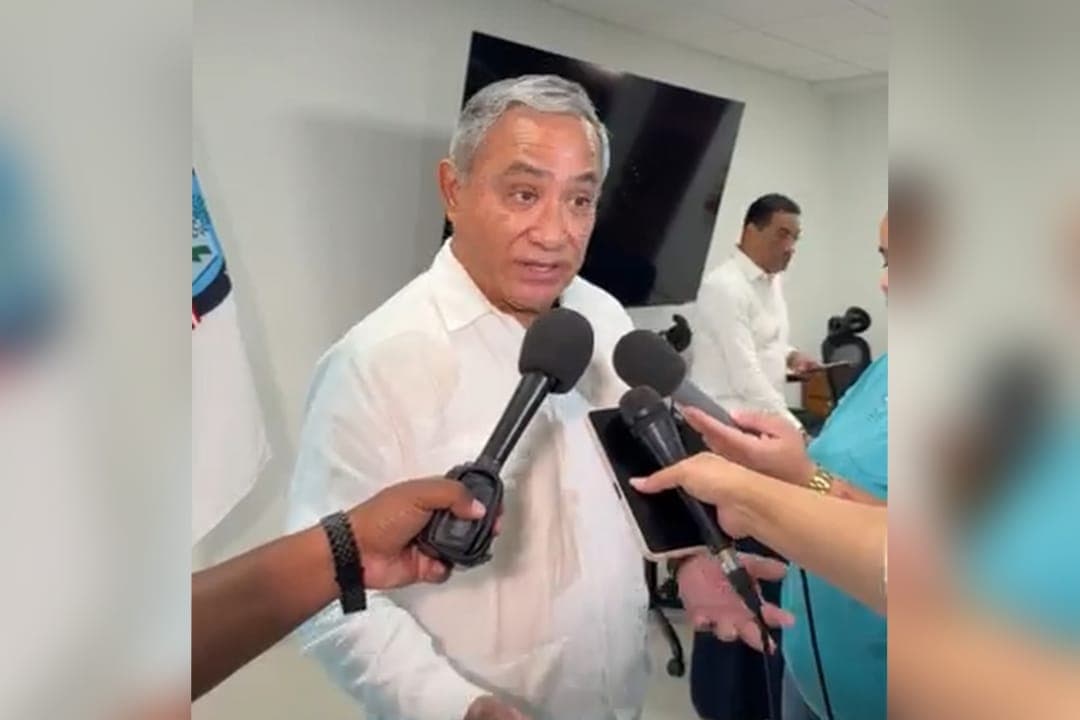
The delay has drawn sharp criticism from Cook Islands United Party leader Teariki Heather, who questioned why crucial logistics were left until after the ship reached domestic waters.
Heather, a prominent local businessman, noted that running shipping services, traditionally managed by the private sector, is no easy task and requires extensive preplanning and logistics.
“Before government decides to buy a boat, you need first the crew. How are we going to crew this boat before it gets here? And they’ve had sort of three years to actually prepare for that and get our people into training. Now, finally, we get the boat then we’ve got to look for the crew,” Heather said.
“That’s the reason why I opposed government entering in any private business like this. Get the private sector to manage this and government supports and subsidises.”
The Ministry said while planning and recruitment commenced well before the vessel arrived, “some requirements could only be completed once the vessel was in Cook Islands waters and regulatory inspections, certifications, and operational assessments had been undertaken”.
It also said all crew positions were advertised well in advance and attracted more than 90 applications.
“However, appointments could only be finalised after candidates were assessed against operational requirements, maritime qualifications, availability, medical clearances, and regulatory obligations.”
As a result, the Ministry said six crew members have now been recruited, including a captain, chief officer, second engineer and three deckhands.
Recruitment is continuing for three remaining operational positions as part of the final establishment phase, it added.
“The three deckhands are Cook Islanders from Pukapuka. The captain and engineer also already have local experience in Cook Islands waters.
“Three newly recruited crew members (from Pukapuka) have also recently completed internationally recognised STCW safety certification training in New Zealand, ensuring they meet recognised maritime safety standards.”
The Ministry also said that, in parallel, work has been progressing on vessel certification, domestic insurance arrangements, shipping documentation, freight management systems, warehouse procurement, port office facilities and Maritime Labour Convention compliance requirements.
“These are all necessary before the vessel can safely and legally carry passengers and cargo.”
According to the Ministry, introducing a new vessel into service has “created a significant administrative and compliance workload, with a small project team managing multiple workstreams simultaneously to ensure all operational and regulatory requirements are met”.
“Safety, compliance, and reliability remain Government’s highest priorities. Government has therefore prioritised completing all requirements properly rather than rushing the Tuitui Moana into operation.
“Recent maritime tragedies in the Pacific (Vanuatu, MV Matui) reinforce the importance of ensuring vessels, crews, and operational systems meet the required safety and regulatory standards before entering service.”
In a press statement released this week, the Ministry said confirmed operating arrangements, voyage schedules and booking information will be released through official MFEM communication channels once the vessel is ready to enter service.
“The Government’s investment in a dedicated domestic shipping capability will strengthen connectivity, resilience and access to essential services across the Pa Enua.
“Once operational, MV Tuitui Moana will support passengers, businesses, suppliers and communities by improving supply chains and access to essential goods and services.
“The fleet programme is intended to establish a long-term domestic shipping service that strengthens connections between the islands, creates maritime employment opportunities and supports economic and social development across the Pa Enua.”
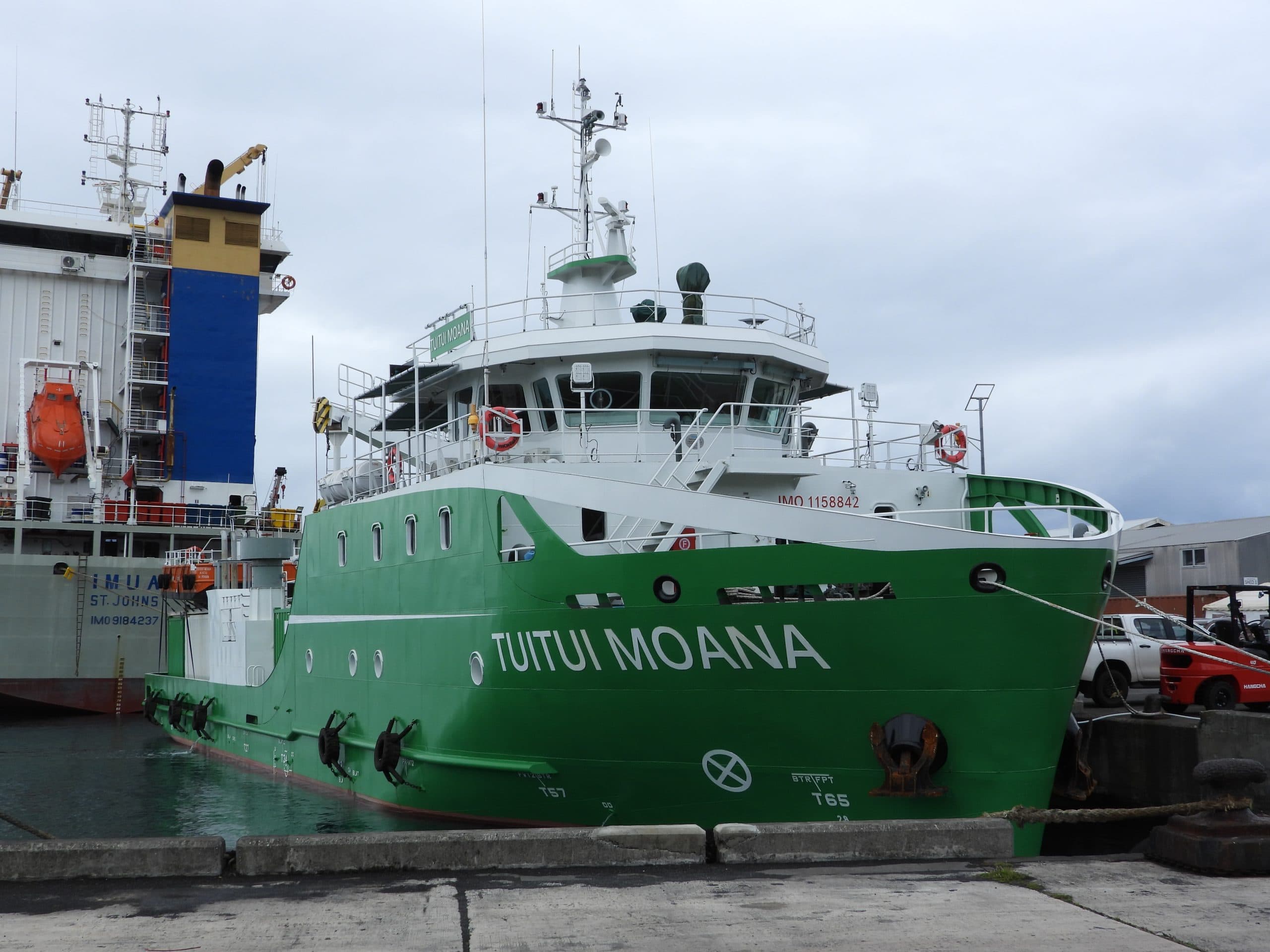
MV Tuitui Moana is 43.9 metres long and can carry up to 12 passengers and 100 tonnes of cargo.

Comments
No comments yet. Be the first to share your thoughts.