
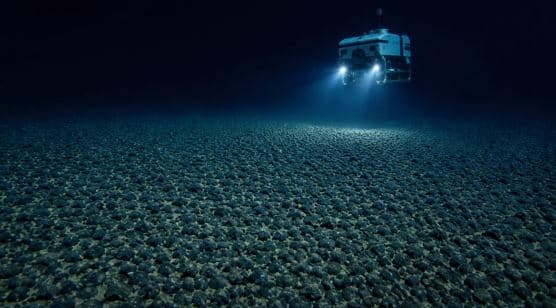
The report, ‘Case Not Proven: The Economics of Deep-Sea Mining,’ concludes that most deep-sea mining projects are set to lose money.
The report found that 83 per cent of stress-tested scenarios result in deep-sea mining projects losing money, with a median outcome of -$5 billion and there is a 61 per cent chance that investors will never recoup their investments.
The report was commissioned by the Deep Sea Conservation Coalition (DSCC), Oceans North, and the International Union for the Conservation of Nature (IUCN), Oceano Azul Foundation, and Dona Bertarelli Philanthropy, and it stress tests the industry’s own economic projections against the risks associated with major frontier resource projects.
SBMA Director of Partnerships and Cooperation, Edward Herman says, “Government is very well aware of development risks and has clearly articulated processes to safeguard things responsibly for the Cook Islands people.”
Herman reiterated that SBMA had published safeguards via an article Are Cook Islands Polymetallic Nodules Economically Viable? on May 23, 2026.
He said the article outlines the issues and safeguards in place for Cook Islands people and public.
The article states that SBMA had checked if Cook Islands Polymetallic Nodules Economically Viable, the short answer was, ‘we checked, and it is more likely than not that they are economically viable.’
The SBMA statement said that there is development risk associated with polymetallic nodules, and that is a key reason why government issues licences to commercial companies rather than trying to develop the minerals itself with taxpayers’ money
It shows that the Cook Islands conducted an assessment in 2022/2023 which considered whether current concepts such as geological basis, mining options, metallurgical processing, economic parameters, environmental aspects and social aspects had reasonable prospects for economic viability.
SBMA’s assessment concluded that, “The polymetallic nodules in the Cook Islands do have Reasonable Prospects of economic extraction.
SBMA says they have developed standards of good practice for the Cook Islands as government choses to try to follow ‘practices recommended (or mandated) for minerals extraction around the world’.
“These practices best cover the technology, environmental and, importantly, market-related risks that need to be considered in assessing economic viability,” adding there are three main studies: scoping /asking if development could be technically and economically viable?, and conducting more engineering and market research further asking what would be the best way to develop the project?.
Finally, the ‘bankable’ feasibility asking, how much will the project cost and make?
“Each of these studies looks at project economics, and each of these studies needs a positive forecast outcome to proceed to the next. The government will only issue a mining licence if the developer provides a positive pre-feasibility or feasibility study. Then there are clear expectations of what these studies need to contain to be acceptable.
“The reason this is industry practice is simple: it reduces risk for all stakeholders. The developers themselves are the best people to do the studies – after all, they understand their projects the best and are most motivated to make them successful,” SBMA had stated.
Meanwhile, it was earlier reported that the Cook Islands environmental non-governmental organisation, Te Ipukarea Society (TIS) reiterated its call for a moratorium, questioning whether promised benefits could outweigh the significant financial and environmental risks.
TIS said the report raised serious concerns about whether deep-sea mining could deliver the “economic benefits that governments and the public have been promised.”
The NGO says that this raises an important concern that private companies could pursue potential rewards while governments and taxpayers remain exposed to the wider financial and environmental consequences.
TIS has called for a transparent, independently verified business case before any move toward commercial mining—one that fully accounts for potential revenues, regulatory costs, liabilities, and impacts on vital industries such as fisheries and tourism.


Comments
No comments yet. Be the first to share your thoughts.