
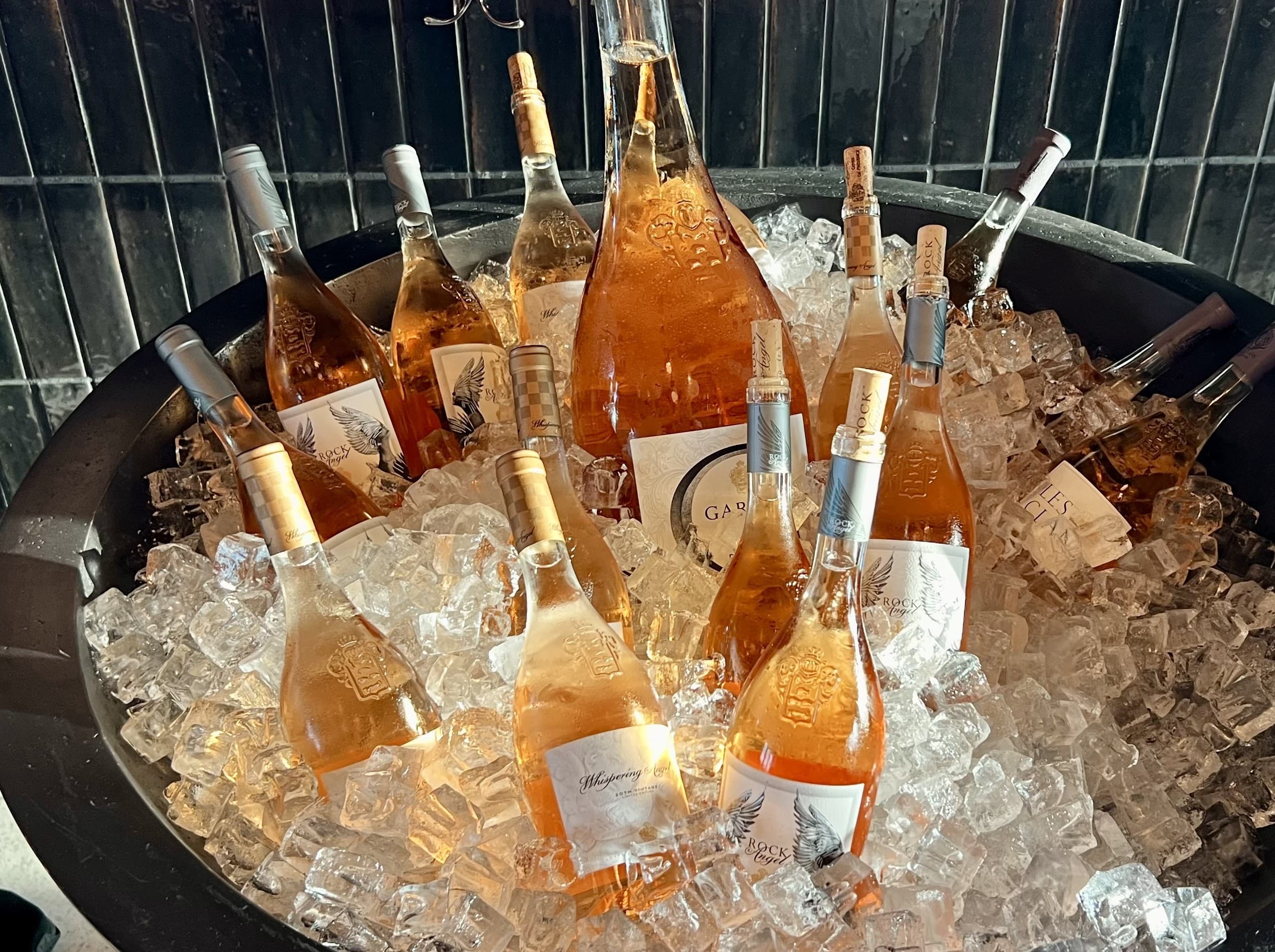
Rosé wines have come a long way in the past 20 years. The world has Sacha Lichine to thank for that, as the attendees learned at a rosé masterclass featuring the wines of Château D’Esclans on 29 Aug.
Presented by Jacques Scott wine specialist Rebecca Leumann, the event featured four of the Provence, France winery’s top rosé wines, paired with nibbles prepared by Hotel Indigo Grand Cayman’s rooftop bar and restaurant, Pom Pom.
Leumann started her presentation with some background on Provence, which is best known for its salmon-pink coloured rosé wines.
The rise of rosé wines, Leumann said, began when Lichine purchased Château D’Esclans in 2006. Until that time, rosés were typically lower quality wines meant to be consumed very young and “by the pool” in the summertime, she said. The Bordeaux-born Lichine had other ideas.
“Sacha decided he wanted to make a rosé “Renaissance” and produce high-quality rosés,” she said. “People thought he was crazy.”
To produce the kind of wines he wanted, Lichine hired legendary French winemaker Patrick Léon, who had worked with the iconic Bordeaux winery Château Mouton Rothschild, as well as Napa Valley’s Opus One winery.
Leumann noted that all Provence rosés had to be blends of different grapes, and that Château D’Esclans uses the red grape varieties such as Grenache, Cinsault and Syrah. She said that up to 20% of the grapes used in rosés can come from white grape varieties. For the Château D’Esclans wines tasted at the masterclass event, that grape is Rolle, which is known in Italy as Vermentino. The escalating use of Rolle in the blends is a defining feature of Château D’Esclans’s wines.
The tasting part of the event started with the most well-known Château D’Esclans wine, Whispering Angel, which is not only the best-selling rosé at Jacques Scott, but also one of its best-selling wines of any kind.
Because he wanted his rosés to have global appeal, Lichine chose a name that was more widely accessible than many other French wines. The name ‘Whispering Angel’ came from a feature of the winery.
“Château D’Esclans has a chapel that has two angels on top that look like they’re whispering to one another,” Leumann said.
Blended with 5% Rolle, Whispering Angel is a dry, easy drinking wine with red berry and floral aromas. It is vinified in stainless steel tanks, which makes it a refreshing, easy drinking wine, ideal for Cayman’s eternal summer days.
Rock Angel gets its name from Lichine’s love of rock music, but also because the vineyard where its grapes grow is rocky.
The wine differs from Whispering Angel for two main reasons: first, it contains more Rolle – 10% of the total – and second, it is aged for a time in large, 600-litre oak casks.
“This gives the wine a little more ability to pair with food and more complexity,” Leumann said.
This wine had a noticeably heavier feel in the mouth and more richness than the Whispering Angel but it still had a refreshing crispness that would make it easy to drink for any occasion.
The third wine tasted at the masterclass took a big step up in terms of complexity and flavours. Although most rosés are meant to be consumed when they’re young – no more than two years old – Les Clans has aging potential of up to seven years.
The one tasted at the masterclass was from the 2021 vintage and at nearly five years old, it still had vibrant acidity and fresh fruit flavours.
Unlike the first two wines tasted, there is no Cinsault in Les Clans and the Syrah in the blend comes from vines that are 50 to 80 years old, giving it very concentrated flavours that add a spiciness to the wine. The wine is aged in large French oak barrels and stirred twice a week so that it interacts with the settled expired yeast, known as ‘lees’. This process gives the wine a velvety feel in the mouth and flavours like baked apples.
Another big difference is the percentage of Rolle used in the blend, which is 15%.
“This gives the wine more structure, more backbone,” Leumann said.
Finishing the masterclass was Garrus (pronounced, ‘Ga-roose’), which is widely considered the pinnacle of rosés in terms of quality. It was also the first rosé to have a retail price of over US$100.
Garrus is a simple blend of Grenache and 20% Rolle, and the grapes for both come from a single vineyard with vines that are 100 years old or more. After ageing in new French oak barrels, the wine resembles no other rosé made today – except perhaps as the more sophisticated sibling of Les Clans. Garrus can age for up to 10 years.
“In blind tastings, this wine is sometimes mistaken for white Burgundies,” Leumann said.
The masterclass was treated to a rare, special format of Garrus, which was poured at guests’ tables from a 6-litre bottle known as a ‘Methuselah’ by Pom Pom server Jakub Krajčo.


Comments
No comments yet. Be the first to share your thoughts.