
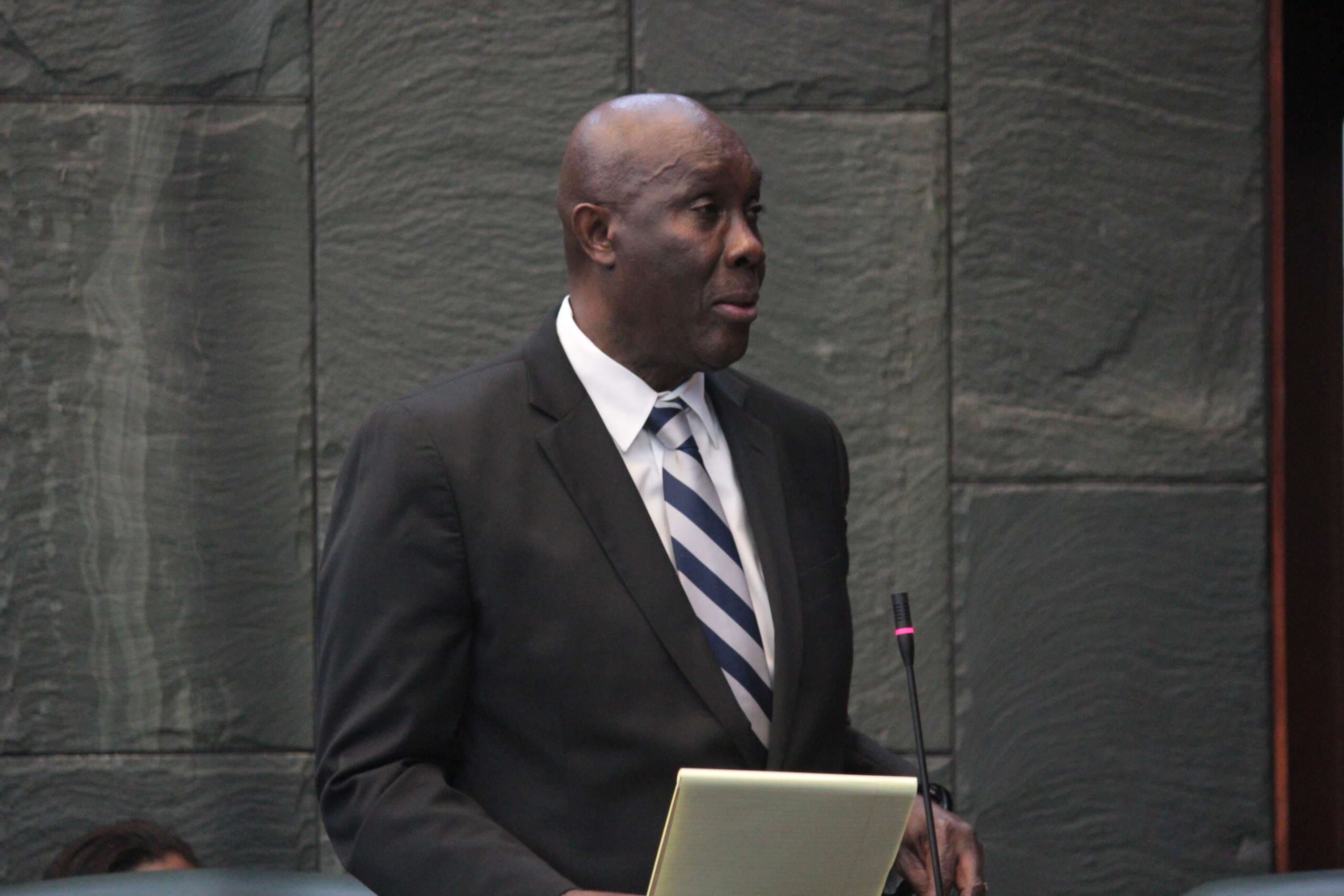
Attorney General Samuel Bulgin has indicated that his office plans to fight an Ombudsman’s ruling on records relating to the appointment of Chief Justice Margaret Ramsay-Hale.
Bulgin, describing Ombudsman Sharon Roulstone’s ruling as “unlawful”, issued a pre-action letter declaring his intention to challenge her decision via a Grand Court judicial review unless she withdraws her ruling.
Former government lawyer Bilika Simamba, who has had a long-running dispute with Cayman’s judiciary, had requested the information under the Freedom of Information Act in January this year. The Commissions Secretariat, acting on instructions from the Judicial and Legal Services Commission, refused his request on the grounds that the legal commission was not a public authority and therefore did not fall within the scope of the FOI Act.
He appealed that refusal to the Office of the Ombudsman.
In her decision, issued on 15 Sept., Roulstone agreed that the Judicial and Legal Services Commission was not a public authority. However, she determined that the Commission’s Secretariat, which holds the records on the commission’s behalf, was a public authority and that the information relating to Ramsay-Hale’s appointment fell within the scope of the FOI Act.
In response to that decision, in a 28 Sept. pre-action letter to Roulstone, the attorney general stated, “The decision of the Ombudsman that the JLSC is not a public authority under the FOI Act is correct and in accordance with the JLSC’s submissions to the Ombudsman. However, the Ombudsman’s further finding that the records of the JLSC are within the ‘scope’ of FOI Act because [they are] held by the Commissions Secretariat is unlawful as was the direction to the Commissions Secretariat to process the FOI Act request for records of the JLSC.”
He added that the Ombudsman’s decision that the records are subject to the FOI Act when held by the Commissions Secretariat undermines that finding, since all of the commission’s records are likely to be held by the Commissions Secretariat “since its function is to provide administrative support to the JLSC which does not itself have any employees or secretariat.”
The Attorney General’s Office gave the Ombudsman seven days to respond to the pre-action letter.
Editor’s note: This article has been amended from the original to correct that the Ombudsman ruled the records relating to the chief justice’s appointment fell within the scope of the Freedom of Information Act, not that the records had been ordered to be released.


Comments
No comments yet. Be the first to share your thoughts.