
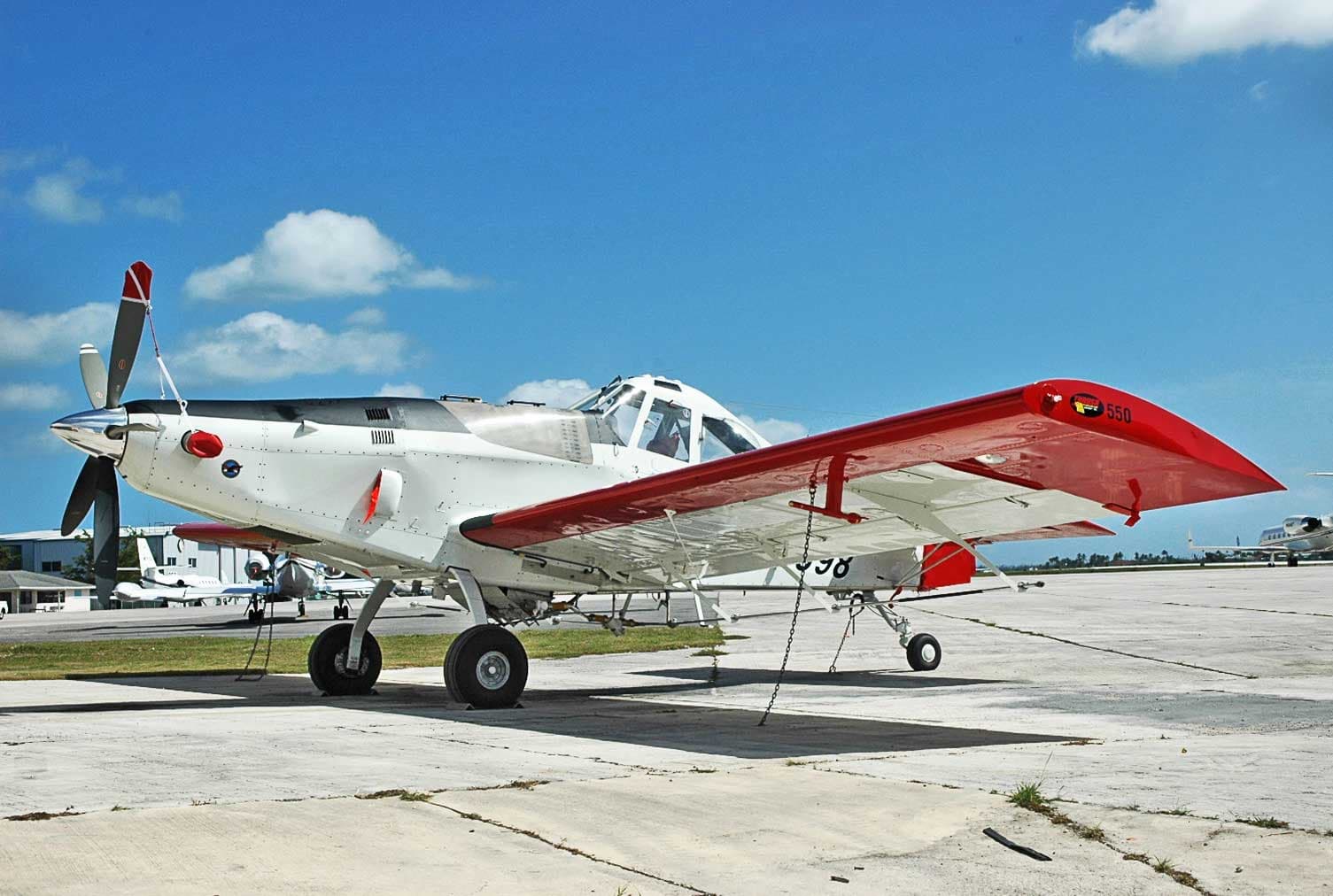
Cayman residents may want to keep the mosquito repellent close at hand, with a surge in mosquito activity expected in the coming days as issues with the Mosquito Research and Control Unit’s ageing aircraft fleet threaten to temporarily halt aerial control operations.
The aircraft issues come at a challenging time for the MRCU. The unit has confirmed mosquito numbers are generally highest during the rainy season, and recent heavy rainfall and higher-than-normal tides have now created extensive breeding grounds.
Residents in Savannah and other areas of Grand Cayman are already reporting an increase in mosquito activity.
In a press release issued on 29 Sept., MRCU advised that increased numbers are expected across all three Islands, with the eastern districts of Grand Cayman likely to experience some of the highest levels.
“The scale of the breeding habitat, combined with areas that could not be treated before weather interrupted operations, means a significant increase in adult mosquito numbers is still expected,” said the MRCU.
Compounding the issue is the availability of MRCU’s two aircraft, both about 20 years old, which provide the fastest means of controlling widespread mosquito populations once they emerge as adults.
Until last week, both aircraft were operational, MRCU Communications Officer Kevin Watler confirmed to the Compass.
One has since developed a mechanical problem and is grounded. Watler said there is currently no way of knowing how long it will take to return the aircraft to service.
The remaining plane has reached its mandatory 100-hour inspection interval but has been granted an additional 10 flying hours.
MRCU intends to use those hours for mosquito control wherever surveillance indicates treatment is most urgently needed.
Once those hours are exhausted, however, the plane must undergo its inspection, which typically takes around two weeks.
Unless the second aircraft is repaired first, Cayman will therefore face a period without fixed-wing aerial mosquito-control capability during the anticipated emergence.
“This limitation is expected to affect MRCU’s ability to rapidly reduce adult mosquito populations across large areas during the anticipated emergence,” the unit said.
MRCU had anticipated the potential increase and began proactive aerial larviciding earlier this month, starting in West Bay and progressing eastwards.
But bad weather interrupted operations before all planned areas could be treated.
The full planned treatment of Bodden Town and North Side was not completed, while treatments in Cayman Brac and Little Cayman also remain outstanding.
MRCU said large emergences following heavy rainfall, tidal flooding and wetland inundation are not unusual in Cayman, “particularly at this time of year”.
The mosquitoes expected to contribute significantly include the black salt marsh mosquito, Aedes taeniorhynchus and Psorophora species, some of the largest mosquitoes found in Cayman.
Government approved $1.8 million in November 2025 for a replacement aircraft after acknowledging the existing fleet had exceeded its optimal service life.
Watler confirmed Tuesday that the replacement is still at least a year away, although it is expected to arrive within two years.
In the meantime, MRCU will use truck fogging and other ground-based measures.
“Truck fogging can provide relief,” the MRCU said, but its reach is limited and trucks cannot cover large geographical areas as quickly as aircraft.
Residents can also help by emptying buckets, plant saucers, tires and other containers holding water around their homes, reducing breeding opportunities for Aedes aegypti, the mosquito capable of transmitting dengue and other viruses.



Comments
No comments yet. Be the first to share your thoughts.