
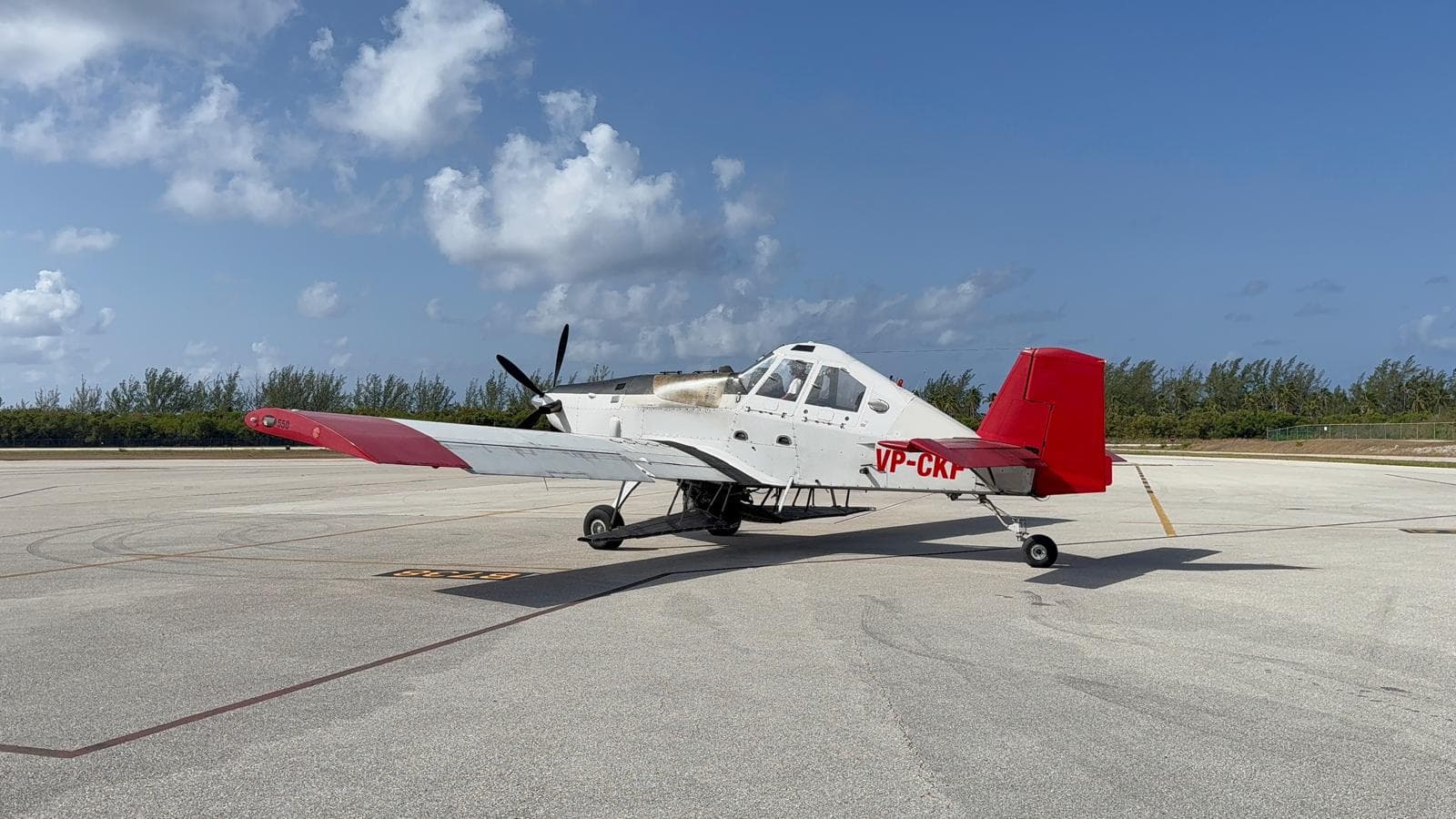
The Mosquito Research and Control Unit has restored one of its two ageing aircraft to service, providing a boost to mosquito control operations after several weeks without aerial support.
The MRCU confirmed on 20 Oct. that the aircraft had successfully completed its mandatory 100-hour inspection and was once again available for mosquito control operations across the Cayman Islands.
The return of the plane restores a critical component of the unit’s ability to tackle widespread mosquito populations, particularly in areas affected by recent heavy rainfall and tidal flooding.
The plane had been grounded for its scheduled inspection while the unit’s second aircraft remains out of service because of mechanical problems.
Both aircraft are approximately 20 years old and have experienced increasing maintenance requirements.
The MRCU said, mosquito numbers have improved considerably over the past two weeks, although “mosquito activity remains at unacceptable levels in several communities, and some residents continue to experience significant biting.”
The latest update follows a Compass report on 10 Oct. that mosquito trap counts on Grand Cayman had fallen approximately 75%, from 41,000 mosquitoes on 3 Oct. to around 10,000 on 7 Oct.
The decline occurred despite the absence of aerial mosquito control, with crews relying on truck fogging, ground-based larviciding and targeted treatments.
The return of the aircraft means MRCU can now resume aerial treatments alongside those ground operations, enabling faster coverage of extensive mosquito breeding areas.
The unit said surveillance traps, field inspections and reports from residents will continue to guide where treatments are most urgently needed.
Despite the improvement, questions remain over the reliability of MRCU’s ageing aircraft fleet.
Government has allocated a total of $3.6 million towards purchasing two replacement aircraft, following increasing maintenance problems with the existing planes.
Health, Environment and Sustainability Minister Katherine Ebanks-Wilks told Parliament earlier this month that the first replacement aircraft could arrive in early 2027.
Meanwhile, MRCU’s two specialist mosquito-control application drones also remain unavailable after being damaged in separate incidents earlier this year.
The return of one aircraft therefore provides a welcome improvement, but the unit continues to operate with limited aerial capacity.
MRCU is encouraging residents experiencing persistent mosquito activity to report problem areas by emailing MRCU@gov.ky or sending a WhatsApp message to 936-8503, including their location and details of the biting activity.
The unit is also urging residents to inspect their properties once or twice weekly and empty containers holding standing water.
Although much of the recent mosquito surge has been associated with flooded wetlands, buckets, discarded tyres, plant saucers and other containers can provide additional breeding sites around homes.
MRCU said it will continue monitoring mosquito populations and adjusting control operations according to surveillance results and conditions across the Islands.



Comments
No comments yet. Be the first to share your thoughts.