
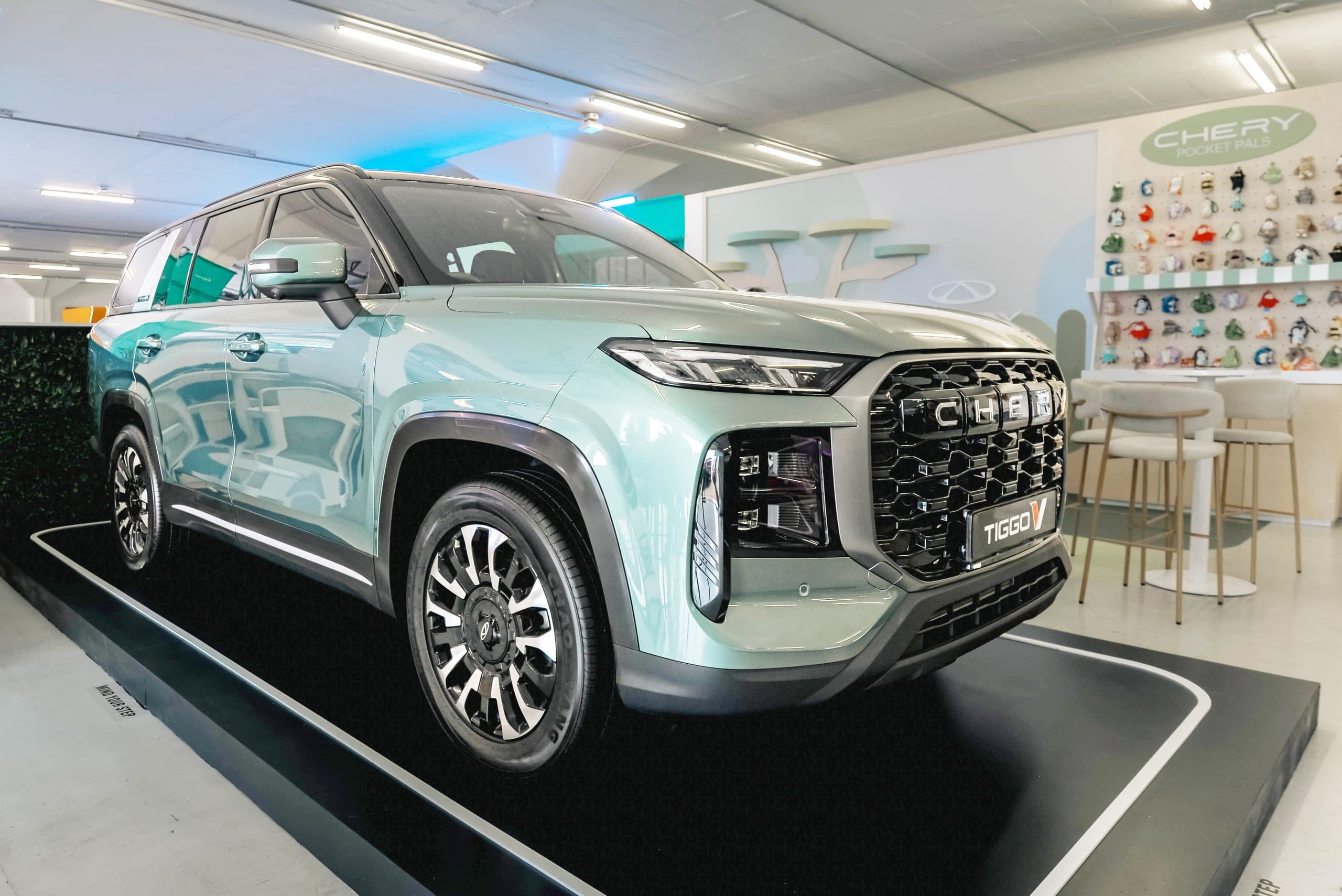
Chery recently previewed three models to take the brand into new areas of the market.
The new models are comprised of the compact electric Chery Q, the Tiggo V and the KP31 diesel-hybrid bakkie.
While these models vary in application and segment, their collective presence underscores Chery’s strategic move to diversify its southern African portfolio beyond its established SUV foundations.
“Chery is well known for its SUVs, and they remain an important part of our business, but the range is growing,” said Verene Petersen, national marketing manager at Chery South Africa.
Commenting on the compact electric vehicle, the flexible seven-seater and Chery’s first bakkie, Petersen said it is a clear indication of where Chery is heading and the broader choice it intends to offer local customers.
Chery Q
The Chery Q brings the brand into the compact electric market.
At 4 200 mm long, it has been designed primarily for the city, where smaller dimensions and easy manoeuvrability matter.
Its dedicated T1X 3.0 electric platform and 2 700 mm wheelbase allow it to provide more cabin space than its exterior size may suggest.
A rear-mounted motor frees up space for a 70-litre front storage compartment, while a further 38 storage areas are positioned throughout the cabin.
With the rear seats folded, carrying capacity increases to as much as 1 450 litres.
The Q uses rear-wheel drive, independent front and rear suspension and a 50:50 weight distribution. A 5.225-metre turning radius should make tight streets and parking areas easier to negotiate.
Inside, it features a 15.6-inch 2.5K central display powered by a Qualcomm Snapdragon 8155 processor, along with Level 2 driver-assistance technology that includes automated parking and a 540-degree camera system.
Tiggo V
Alongside the Q, Tiggo V presents a different take on the family SUV.
The seven-seater has a 2 800 mm wheelbase, sliding second-row seats, 42 storage compartments and ventilation for all three rows.
Its main feature is a transformable rear body SUV structure that allows the enclosed third row seats compartment to be reconfigured with an open, pickup-style load area.
This gives owners additional room for camping equipment, outdoor gear and other large items without relying on extensive aftermarket modifications.
Tiggo V is powered by the Chery Super Hybrid (CSH) system. Preliminary figures indicate fuel consumption as low as 6 litres per 100 km and a combined NEDC range of up to 1 030 km.
Ground clearance of 220 mm also makes it better suited to poor roads and unpaved routes.
KP31
Completing the preview is the KP31, a bakkie that takes Chery into one of southern Africa’s largest and most competitive vehicle segments.
Developed on a dedicated hybrid platform, the KP31 combines a 2.5-litre turbo-diesel engine with electric power and four-wheel drive.
Preliminary specifications include combined outputs of 350 kW and 800 Nm, an electric-only range of up to 100 km on the NEDC cycle and a braked towing capacity of 3 500 kg.
Its load box measures 1 560 mm long, 1 560 mm wide and 500 mm high, while ground clearance is no less than 247 mm when fully loaded.
Vehicle-to-Load functionality allows the bakkie to power external equipment such as tools and camping appliances, adding another practical use for its hybrid system.
KP31 is not necessarily the name used when the bakkie reaches the local market. Chery recently invited customers to suggest an original name for the model, with the number of submissions exceeding 20 000.
Together, the Chery Q, Tiggo V and KP31 show the wider range of vehicles and powertrains Chery is considering for southern Africa. Further details on local specifications, model ranges, pricing and launch timing are expected in due course.

Comments
No comments yet. Be the first to share your thoughts.