
Last week, I sat in a virtual room with colleagues from the World Federation of the Deaf and sister Deaf associations across our region. The meeting itself made the case I want to make here: a Deaf person in Windhoek, a colleague in Maputo, and a partner in Helsinki, discussing our future together in real time. None of that is possible without one thing… access to Information and Communication Technology (ICT).
ICT is not a luxury for people with disabilities. It is the difference between dependence and independence. For a Deaf person, a smartphone with data is an interpreter booking, a video call in sign language, a news bulletin with captions, an e-learning platform, a job application, a telehealth consultation, and an emergency service, all in one hand. When the technology is accessible and affordable, we do not need anyone’s permission to participate in society. That is the true definition of an independent life.
The world has already agreed… on paper
This is not a new idea; it is a promise already made. The UN Convention on the Rights of Persons with Disabilities, which Namibia has ratified, is explicit. Article 9 states to ensure equal access, on an equal basis with others, to information, communication and other services, including electronic services. Article 21 goes further: freedom of expression and access to information include accepting and facilitating sign languages and urging private providers and the media to make their services accessible. Article 4 commits states to promoting the research, development, and availability of new technologies at affordable cost, prioritising affordability.
The World Federation of the Deaf has reinforced this in its Statement on the Adoption and Adaptation of Technologies and Accessibility, with one non-negotiable principle: nothing about us; technology that affects Deaf people must be designed with Deaf people.
The Sustainable Development Goals say the same thing in four words: leave no one behind. And on our own continent, the African Disability Protocol brings these obligations home.
The gap is not in the instruments. The gap is between the paper and the person.
Formal recognition
Formal recognition of Namibian Sign Language is not only a cultural and educational demand but also a technology accelerator.
Recognition legitimises investment: in NSL documentation and digital dictionaries, in interpreter services delivered remotely, and in research into AI models that work hand in hand with sign language rather than around it.
Around the world, researchers are building sign language technologies with artificial intelligence.
If our language is not recognised, documented and digitised, Deaf Namibians will be left out of that future, served, at best, by tools built for other people’s languages.
Recognition today is the foundation of accessible AI tomorrow: captioning, sign-language content, relay services, and public information available in NSL as a matter of course.
With it, access to services, health, education, banking, and government becomes undeniably easier.
Affordability is accessibility
Here is the uncomfortable truth: the most accessible technology in the world is useless to anyone who cannot afford data.
For Deaf people, video is not entertainment; it is language. Sign language lives on video, and video lives on data.
Expensive data is therefore not an inconvenience for us; it is a communication barrier as real as a missing interpreter.
This is why I call on our operators and our regulator to act.
Rebated data packages from providers such as MTC for people with disabilities and for students who need them most would be a direct, practical investment in independence, education and employment. Universal service obligations and disability-inclusive ICT policy can make such measures standard, not charity.
The call to action: Let us be specific about what must happen. We need affordable, rebated data for people with disabilities and students, backed by policy that makes affordability an obligation rather than a gesture.
We need disability-inclusive ICT policies enacted and enforced so that accessible equipment and services are within reach of ordinary Deaf Namibians.
We need formal recognition of Namibian Sign Language, which would unlock advanced research that leverages AI alongside sign language, designed with Deaf people, not for us.
And we need to measure success by one standard only: whether Deaf people and other people with disabilities can access information, reach services, and lead genuinely independent lives.
Access to information is not a favour.
It is a right we have already been promised. It is time to deliver it.
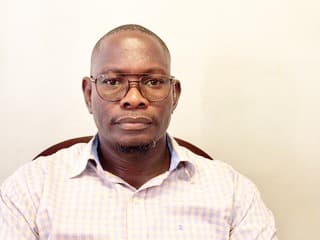
*Linekela Paul Nanyeni holds a master’s degree in education (Deaf Studies) from the University of the Witwatersrand. He serves as National Executive Director of the Namibian National Association of the Deaf (NNAD) and Project Director of NAMSLAP (Namibian Sign Language App). He writes as a leader of the Namibian Deaf community and as an advocate for inclusive, equitable, and quality education for all learners with special educational needs.
Comments
No comments yet. Be the first to share your thoughts.