
“Ohani kai nyanderwa omukandi,” is an Otjiherero adage, loosely translating to “division must never be celebrated.”
This is true to the current divisions prevailing among the Ovaherero people in general and the Ovaherero Traditional Authority (OTA) in particular.
In the heart of Namibia’s history lies a tragic chapter that continues to shape the destiny and contemporary wellbeing of the Ovaherero. It was a dark period that saw a gruesome genocide unfold here in this country between the years 1904 and 1908.
That genocide, which resulted in the targeted annihilation of up to 80% of the Ovaherero population and approximately 50% of the entire Nama population at the time by imperial German forces, was marked by unimaginable suffering and loss. Today, as the Ovaherero community seeks restorative justice, recognition, an apology and reparations from the German government, it is imperative to understand that true progress hinges on the unity of the tribe.
It must be unity that transcends factions, divisions and petty politics. In fact, the fight for restorative justice should serve as a rallying point for both the Ovaherero and Nama people.
And while I must admit that the cause for restorative justice has in recent years been universally unifying in most quarters of society, the OTA as an institution has unfortunately failed to leverage that unity. Historically, the core governance system of the Ovaherero was unified in 1863 at Otjimbingwe, and it was further institutionalised in the 1890s to unite distinct royal houses under a single paramount chief.
Under this historical legacy, the OTA’s foundational responsibilities included serving as a non-hereditary, republican leadership structure representing all people of Ovaherero descent across Namibia and its global diaspora.
The OTA was also tasked with the sacred responsibility to preserve, promote, and protect the socio-economic, cultural, linguistic, and political interests of the Ovaherero nation.
In other words, especially in African customary philosophy, the OTA as an institution is a consecrated haven belonging to the ancestors and the living Ovaherero people. No individual is or should be more important than the overall good of the people.
The current fragmentation within the OTA highlights the danger of elevating personal status over the community’s well-being, and the ongoing public squabbles over who holds the chieftaincy title threaten to distract from the pressing socio-economic needs of impoverished Ovaherero communities.
The core threat to the OTA’s capacity is the exhausting, endless, ego-driven and highly publicised leadership battle between Professor Mutjinde Katjiua and Dr Hoze Riruako, which has split the community into two factions and resulted in court battles and public recriminations.
Leadership
As history records, a paramount chief at the helm of the OTA has always been valued primarily for their ability to protect, sustain, and unify the Ovaherero people.
When leadership battles alienate the youth and women and exhaust limited community resources on litigation, then the leaders have dismally failed the very mandate they claim to protect and serve. The blood and spirit of our ancestors and founders of the OTA cry out not for division but for the fierce, unbreakable unity that once shook the foundations of the imperial German Empire during the blood-spattered colonial war of resistance, which is today widely recognised as the first genocide of the 20th century.
The greatness and majesty of the OTA were never built on internal strife and individual gains but was forged in the fires of resilience, cultural pride, and unwavering leadership for the collective good of the people.
The two contesting chiefs must step forward not as rivals but as sons of the same people, and personal ambition must bow to the collective survival and dignity of the entire Ovaherero community.
True leadership is measured by the ability to heal wounds and build bridges in times of crisis. I must underscore here that time for deliberation has passed; the community and especially the youth; demand decisive, unified action today – not tomorrow.
I must confess here, albeit with my head buried in shame, that prominent community elders, leaders and scholars are today amongst those bankrolling the OTA’s protracted internal division, and they are doing it without any shame or repentance.
Our elders and leaders are consumed by succession politics, leaving a vacuum in society where professional and traditional guidance for the youth is so badly needed.
Today, young Ovaherero people are increasingly alienated from their own cultural heritage, as most view the current OTA as a source of conflict rather than an economic lifeline. When you attend OTA functions held by the two factions, it is visible that the division has forced the youth to choose their political factions, and that has split and weakened their collective bargaining power.
But a time will come, if it has not already, when the Ovaherero youth will have to choose their destiny and decide on their survival.
The youth will be forced to shift from the current paralysing leadership disputes to independent economic networking for survival.
In today’s Namibia, wealth creation lives in technology, green energy, and international trade, not in endless tribal politics.
Most youth live in urban centres like Windhoek, facing high rent and unemployment that traditional structures like the OTA, especially in their current form and shape, have no solutions or answers to.
Instead of leveraging traditional structures to fight high youth unemployment and lack of opportunities, OTA leadership factions have spent years locked in court battles and legitimacy disputes.
Mirage
Externally, the OTA remains highly effective at driving the genocide reparations agenda on the public arena, but its internal capacity is strained by competing centres of power. This fracturing dilutes the authority’s ability to seamlessly execute its customary mandate, as community members and the Namibian government are forced to navigate competing claims of legitimacy.
Despite the leadership split, both factions have fiercely rejected the controversial Namibia-Germany Joint Declaration (JD). They accurately point out that the €1.1 billion over 30 years is framed merely as “development aid” rather than formal legal reparations for the genocide.
Both Katjiua and Riruako demand a trilateral negotiation process that places the affected communities directly at the table under the banner of “nothing about us, without us”.
But again, the OTA’s legal and political leverage is severely undermined and compromised by its internal divisions.
The German government has seen this loophole and continues to weaponise these divides to bypass traditional leaders.
And while the OTA has collaborated with the Nama Traditional Leaders Association (NTLA) and political parties like the Landless People’s Movement (LPM) to legally challenge the Joint Declaration, the lack of a single, undisputed paramount chief weakens their collective bargaining power and legal standing.
And on the other hand, the Ovaherero Genocide Foundation (OGF), which is a technical arm of the OTA, continuously files domestic and international litigation, but their voice is less impactful because governments often deal only with state-recognised or compliant traditional organisations.
It is a harsh reality, but for the OTA to rely solely on external institutions such as courts and government to resolve its internal divisions is a huge mistake.
While these bodies can offer legal and administrative support and recognition, they cannot replace the moral authority and unity of the Ovaherero people.
Way forward
The true power to heal and restore the OTA lies within the community itself. For the OTA to reclaim its historic status as a powerful, singular voice for self-preservation and development, the Ovaherero people must cease to rely on courts to pick a traditional leader for them, as that will further deepen the rift. True resolution for the OTA requires returning to established cultural structures, like a unified traditional senate, to choose a leader through consensus.
Leaders from both sides must actively de-escalate defamatory rhetoric and stop organising parallel rival gatherings that confuse the public and exhaust community resources. Ordinary members of the Ovaherero community have the power to demand accountability and refuse to let the legacies of past visionary leaders like Samuel Maharero, Hosea Kutako, Clemens Kapuuo and Kuaima Riruako be overshadowed by individual power struggles.
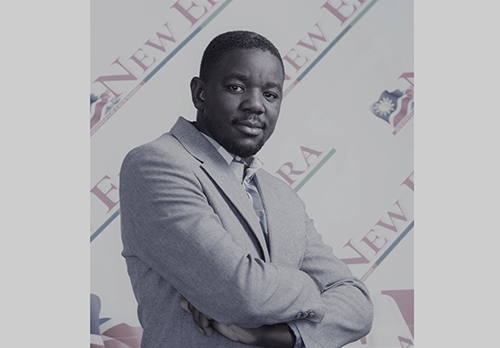
*Otniel Hembapu is a senior journalist at New Era and a descendant of victims of the 1904/08 genocide. He writes in his personal capacity.

Comments
No comments yet. Be the first to share your thoughts.