
Namibia must have a courageous national conversation today about the language used to educate our children.
This is not an argument against our mother tongues. Oshikwanyama, Oshindonga, Rukwangali, Silozi, Khoekhoegowab and Namibia’s other languages are part of our identity, history and cultural heritage. They must be protected, promoted and preserved. But protecting our languages and preparing our children for the future are not competing objectives. Our children deserve both. We must recognise the Namibia we live in today. Our children are growing up in a world shaped by technology, the internet, social media and international communication. English is already a major language of higher education, business, employment and global communication. Our children will compete for university places, scholarships, employment and opportunities beyond Namibia. They must communicate confidently and professionally.
Under Namibia’s current education framework, mother tongue is used as the medium of learning in Junior Primary, particularly Grades 1–3, while English is phased in from Grade 4. There is a legitimate educational rationale for mother-tongue instruction, particularly in concept formation, literacy and numeracy. But we must ask whether implementation gives every child a comparable opportunity to develop English proficiency.
Mother tongue is not the problem — unequal opportunity is. The problem arises when children receive significantly different exposure to English depending on the school they attend yet are later expected to compete for the same opportunities.
A learner in an English-medium environment may hear English throughout the school day. Another may encounter English mainly during the English lesson, while other subjects are taught primarily through the mother tongue. Both may eventually write the same examinations and compete for the same university places, scholarships and jobs. Have they received the same opportunity to develop English?
Consider, for example, an English spelling competition: a learner exposed to English from an early age may have a natural advantage over a learner who has mainly encountered English as a subject, not because one child is more intelligent, but because one has simply had greater exposure and practice.
The government must clearly explain what determines the language of instruction in State schools. If “predominant language” is a criterion, what exactly does it mean? Is there a defined threshold? Is the decision based on linguistic composition, parental demand, teacher availability, infrastructure, school capacity or specific authorisation? Who decides, and are the same criteria applied consistently across Namibia? There is a fundamental difference between learning English as a subject and living and learning through English. Children need opportunities to hear, speak, read and use English naturally. Repeated exposure builds fluency, confidence, pronunciation and academic vocabulary.
This issue is not unique to one region only. The same questions deserve attention in Omusati, Oshana, Oshikoto, Kavango East, Kavango West, Zambezi and elsewhere. This is a national education issue. Geography should not determine the quality of opportunity a child receives.
If Nakambuda School is authorised to use English as its medium of instruction while schools such as Oshikango Combined School or Ohangwena yAmon operate under different arrangements, government should explain the policy rationale. What objectively determines the difference? Is it parental demand, teacher availability, infrastructure, linguistic composition, school capacity or special authorisation? Are the same criteria applied consistently?
Article 10 of the Namibian Constitution provides for equality before the law and equal protection of the law, while Article 20 guarantees the right to education. The Constitution also recognises Namibia’s linguistic diversity. The Basic Education Act 2020 places inclusivity, equity, universality, non-discrimination and quality education at the centre of basic education.
I am not calling for the abolition of mother-tongue education. I am calling for the language-of-instruction policy to be reviewed, strengthened and modernised.
Government should consider intensive English exposure from Grade 1, structured bilingual transitions, protection of indigenous languages, stronger teacher development, greater support for rural schools, transparent criteria for English-medium education and proper measurement of English proficiency, including speaking, listening, reading, writing, comprehension and academic communication.
Every State school should have a fair opportunity to apply for English-medium education where there is demonstrated parental demand, proper consultation and the necessary teaching capacity. If “predominant language” is a criterion, the methodology must be clearly defined and publicly available.
If some schools receive greater exposure because of personal connections or administrative favouritism, that is an injustice to our children. Rules must be clear, criteria transparent and decisions consistently applied. No child should have better educational opportunities because his or her school has the right connections.
Government should therefore undertake a national review of language-of-instruction arrangements across State schools. The review should examine criteria, authorisations, parental demand, teacher capacity, linguistic composition and learner outcomes, and its findings should be made public.
Let us preserve our mother tongues, respect our cultures and protect our linguistic identity. But let us also give every Namibian child the English proficiency needed to compete confidently in modern Namibia and the wider world. We should not force our children to choose between their mother tongue and their future.
Give them both.
One Namibia. One education system. Equal opportunity.
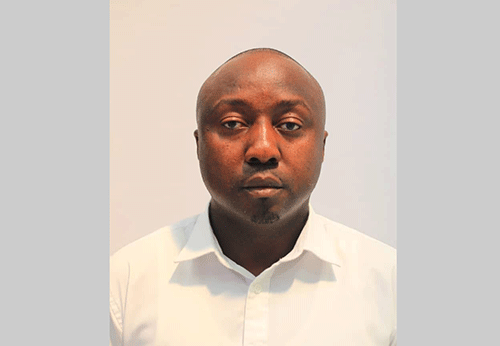
*Hidipo Hamata is writing from Helao Nafidi Town, Ohangwena region.

Comments
No comments yet. Be the first to share your thoughts.