
In a democracy, the pen is often described as a tool of progress, a means by which citizens engage in the vital task of nation-building.
However, the weight of the pen also entails the heavy responsibility of accuracy and the duty to uphold the dignity of those who have dedicated their lives to the service of our Republic.
On 30 July 2026, I authored an opinion piece in this publication, titled ‘Nekundi is right: State property must stay with govt’.
While my intentions were rooted in a genuine concern for the preservation of national assets, I must today stand before the public and, more importantly, before a distinguished son of our soil, to offer a sincere retraction and a heartfelt apology.
The core of my previous article was shaped by a public narrative about the disposal of government property.
In my zeal to advocate for the protection of State assets, I wrongly associated the name of the former Speaker of the National Assembly and decorated academic, Prof. Peter Katjavivi, with a situation I had fundamentally misperceived.
I suggested that his involvement in a property matter represented a desire to privatise an official residence. This was an error of fact and a failure of research on my part.
As Prof. Katjavivi rightly pointed out, the property in question was a condemned site already listed for disposal by the State.
His engagement was part of a formal, transparent process initiated by government officials.
To Prof. Katjavivi, I say this: It was never my intention to mention the name of one of Namibia’s most respected and decorated scholars.
I grew up inspired by your immense contribution to the academic and political landscape of our country. Your legacy as a university leader, diplomat and liberation veteran is a beacon for my generation.
In pursuing public debate, I failed to accord to you the thorough research your distinguished service deserves.
I have no intention of using public spaces to discuss personalities in a way that causes distress or misinformation.
When it comes to a man of your stature, I would rather be humble than bold for respect for our elders and our icons is the bedrock of our culture.
I regret that I allowed the “prevailing public narrative” to cloud my judgment.
I thank you for the grace and discipline with which you corrected me.
However, even as I rectify this personal error, I must remain consistent in my advocacy for policy reform on State resources.
My stance remains firm: State properties, specifically land and buildings, should remain in the hands of the government.
These are not merely assets.
They are the heritage of future generations.
We have seen far too many instances in which the State disposes of land or buildings, only to find itself renting space back from the private sector at a premium. This cycle of disposals erodes our national sovereign wealth.
We must distinguish between permanent assets and those that depreciate.
Land and buildings appreciate and provide stability. In contrast, assets such as State vehicles can and should be disposed of once their maintenance costs outweigh their utility.
This is a matter of fiscal responsibility.
But when we talk about the earth and the structures built upon it, we are talking about the very soul of our liberation struggle.
The struggle for Namibia was, at its heart, a struggle for land.
This realisation brings me to a subject far more deserving of our collective energy than the management of individual houses: the Herero-Nama Genocide.
I believe the true “public space” for debate should be occupied by the quest for justice for our ancestors. What would make Samuel Maharero, Jan Jonker Afrikaner, Jacob Marengo and Hosea Kutako happy?
This is not to bicker over contemporary real estate, but the restoration of the dignity of the people they led and the recognition of the horrors they endured.
Our history is a tapestry of resilience, and the genocide remains an open wound that demands the intellectual and moral weight of our finest minds.
As a young scholar, I look to leaders like Prof. Katjavivi, hoping that one day he will share his candid opinions and deep historical insights on the Herero-Nama Genocide.
His voice, tempered by decades of diplomatic and academic experience, would be invaluable in guiding our nation through the complexities of reparations and historical reconciliation.
His experience would undoubtedly enrich an important national conversation.
Public debate is indeed healthy, but it must be grounded in truth and directed towards the elevation of the national consciousness.
I have learned a profound lesson over the past week: the pursuit of a “correct” policy does not excuse a “wrong” fact.
I remain committed to the principle that State property belongs to the State, but I am equally committed to the principle that truth belongs to the people. Finally, I once again offer my sincere apology to Prof. Katjavivi.
I thank him for accepting my apology privately. That gesture reflects both wisdom and grace.
As we look toward the horizon, may we be guided by the wisdom of those who came before us and the humility to admit when we have stumbled on the path.
Democracy does not require us to be perfect.
It requires us to be honest enough to admit when we are wrong, courageous enough to correct the record, and humble enough to keep learning.
I remain committed to those principles.
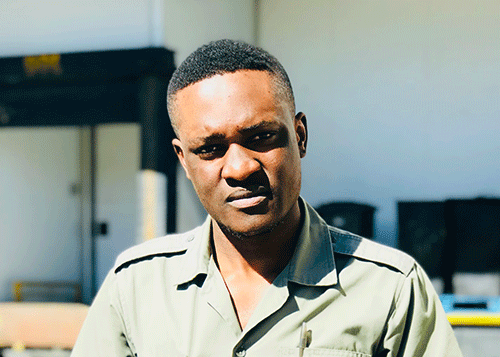
*Hosea Shishiveni is a Namibian scholar and researcher. The views expressed in this article are his own.

Comments
No comments yet. Be the first to share your thoughts.