
Language is more than a means of communication. It carries history, culture, values, traditions, and identity.
When a language disappears, people lose more than words, they lose part of who they are.
The Zambezi region is one of Namibia’s richest cultural landscapes, home to communities such as the Mafwe, Masubiya, Mayeyi, Batotela, Mbukushu and others. Each has its own language and cultural heritage. Yet many of these indigenous languages remain underdeveloped in the formal education system.
This article is not written to criticise any language or community. Rather, it seeks to encourage a national conversation about preserving Namibia’s rich linguistic diversity.
Like many people of my generation, I was educated mainly through Silozi and English. Silozi has played an important historical role in the Zambezi region, serving for decades as a language of education, administration, trade, church life and communication between communities. That contribution deserves recognition and respect.
However, recognising the importance of Silozi should not mean overlooking the mother tongues that many children first learn at home.
The current situation has deep historical roots.
During the colonial administration of the former Caprivi Strip, Silozi became the dominant language in schools and government institutions. Although Namibia’s Language Policy for Schools encourages mother-tongue instruction in the early years of education, many communities in the Zambezi region have not fully benefited from this vision.
While several Namibian languages have been developed into school subjects with standardised writing systems, textbooks and trained teachers, many indigenous languages in Zambezi remain largely absent from formal education.
As a result, many young speakers of Sifwe (Chifwe), Subiya, Siyeyi, Chitotela, Totela, and other indigenous languages can speak their mother tongues but cannot read or write them confidently. This is not a failure of our children but a reflection of the educational system they inherited.
Language preservation is not simply about literacy. Every indigenous language carries oral history, traditional knowledge, environmental understanding, customs, songs and values that cannot always be fully translated into another language. When a language weakens, the knowledge it carries is also placed at risk.
Even our names tell stories. My own surname, Mboozi, reminds me that names carry history and meaning passed down through generations. Yet many young people today cannot explain the meaning of their own names because the languages that gave those names life are gradually disappearing.
The decline of indigenous languages is not inevitable. It can be reversed through deliberate action.
The Ministry of Education, Innovation, Youth, Sport, Arts and Culture, together with the National Institute for Educational Development, the University of Namibia, traditional authorities, churches, language experts and local communities, should work together to document, standardise and develop the indigenous languages of the Zambezi region.
This includes strengthening writing systems, producing dictionaries and textbooks, training teachers, and creating opportunities for children to learn in their mother tongues where practical. Parents also have a vital responsibility. Schools alone cannot preserve languages. Children must hear, speak and value their mother tongues at home if those languages are to survive.
Importantly, this is not a call to replace Silozi. It remains an important regional language and part of Namibia’s cultural heritage. Instead, this is a call for inclusion, ensuring that every indigenous language community has an opportunity to preserve and develop its own language while embracing multilingualism.
I also propose establishing a Zambezi Indigenous Languages Summit, bringing together government, educators, researchers, traditional leaders, churches, and communities to develop a practical roadmap for documenting, teaching, and promoting all indigenous languages spoken in the region.
Namibia’s Constitution recognises our cultural diversity. Our education system should reflect that diversity by ensuring that no language community feels invisible.
Future generations will judge us not only by the speeches we made but by what we preserved. A people who lose their language lose memory, identity and the wisdom of those who came before them. Our indigenous languages are not relics of the past. They are bridges to the future. If we fail to protect them today, who will speak them tomorrow?
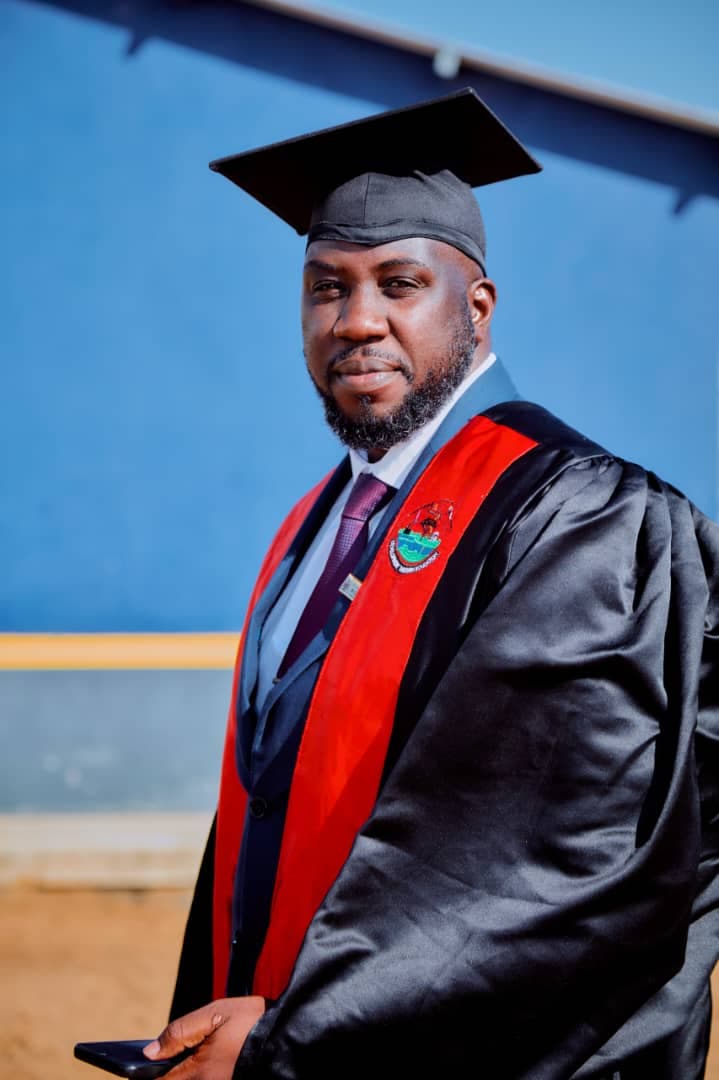
* Situnda Mboozi is an Agricultural Science educator from Zambezi, now in Kavango East, and is passionate about education, cultural preservation, and empowering youth. Through his writing and community work, he advocates for inclusive education, indigenous knowledge, and Namibia’s cultural and linguistic diversity.
The views expressed are his own.
Comments
No comments yet. Be the first to share your thoughts.