
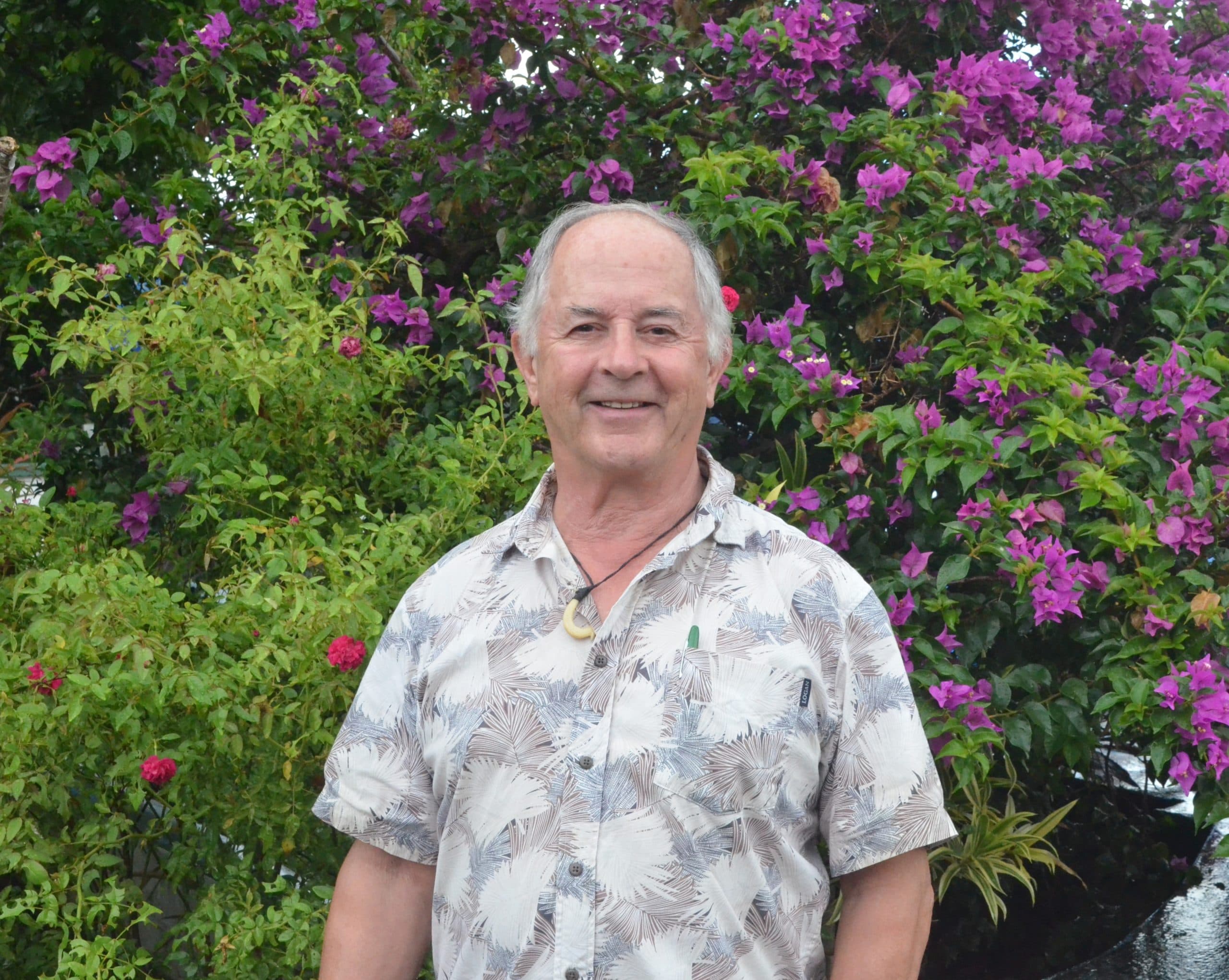
Cramp’s visit is a follow-up to earlier work last year facilitated by Te Pae Tanu/Ministry of Agriculture, aimed at strengthening beekeeping practices in the country.
“We’ve helped put beekeeping on a sounder footing with training and guidance, and now the focus is on ensuring the programme continues, particularly from a governance and ministry perspective,” he said.
Cramp noted that beekeeping in the Cook Islands is currently in a strong position, with skilled beekeepers producing and selling high-quality honey.
However, he stressed that maintaining a disease-free environment is critical to the industry’s long-term sustainability.
“There is no varroa mite in the Cook Islands at the moment, which is a major advantage,” Cramp said.
Varroa is a deadly parasite that has devastated bee populations in many countries.
American foulbrood, another serious disease, was detected decades ago but has not been seen since.
Cramp said his work focuses on early detection and prevention of bee diseases through visits to local beekeepers.
He has already begun visiting hives and plans to continue throughout his three-month stay, including potential visits to Mauke and Aitutaki to assess opportunities for beekeeping there.
As part of his work, four local beekeepers are participating in a trial using artificial intelligence sensors developed by a scientific laboratory in Poland.
The sensors monitor hive conditions in real time, measuring indicators such as carbon dioxide levels and pheromones to detect the early onset of disease.
The data sends information to the cloud that is transmitted to a laboratory and back to beekeepers, providing early warnings before problems become visible.
Cramp said diseases can be introduced through several pathways, including ships carrying swarms of infected bees or imported honey products.
American foulbrood spores, he explained, can survive for up to 40 years and reactivate once they enter a hive, highlighting the importance of strict biosecurity measures.
Cramp acknowledged that one of the challenges in the Cook Islands is identifying how many beekeepers are operating, as some prefer to work independently.
“There are beekeepers I’m still discovering who want to learn more and improve their practices,” he said.
Cramp encouraged beekeepers to contact the ministry for support during his visit.
“Disease is very difficult to detect without training, and by the time symptoms appear, it can be too late.”
He said maintaining strong biosecurity and awareness is essential to protect the Cook Islands’ healthy bee population and growing beekeeping sector.

Comments
No comments yet. Be the first to share your thoughts.