
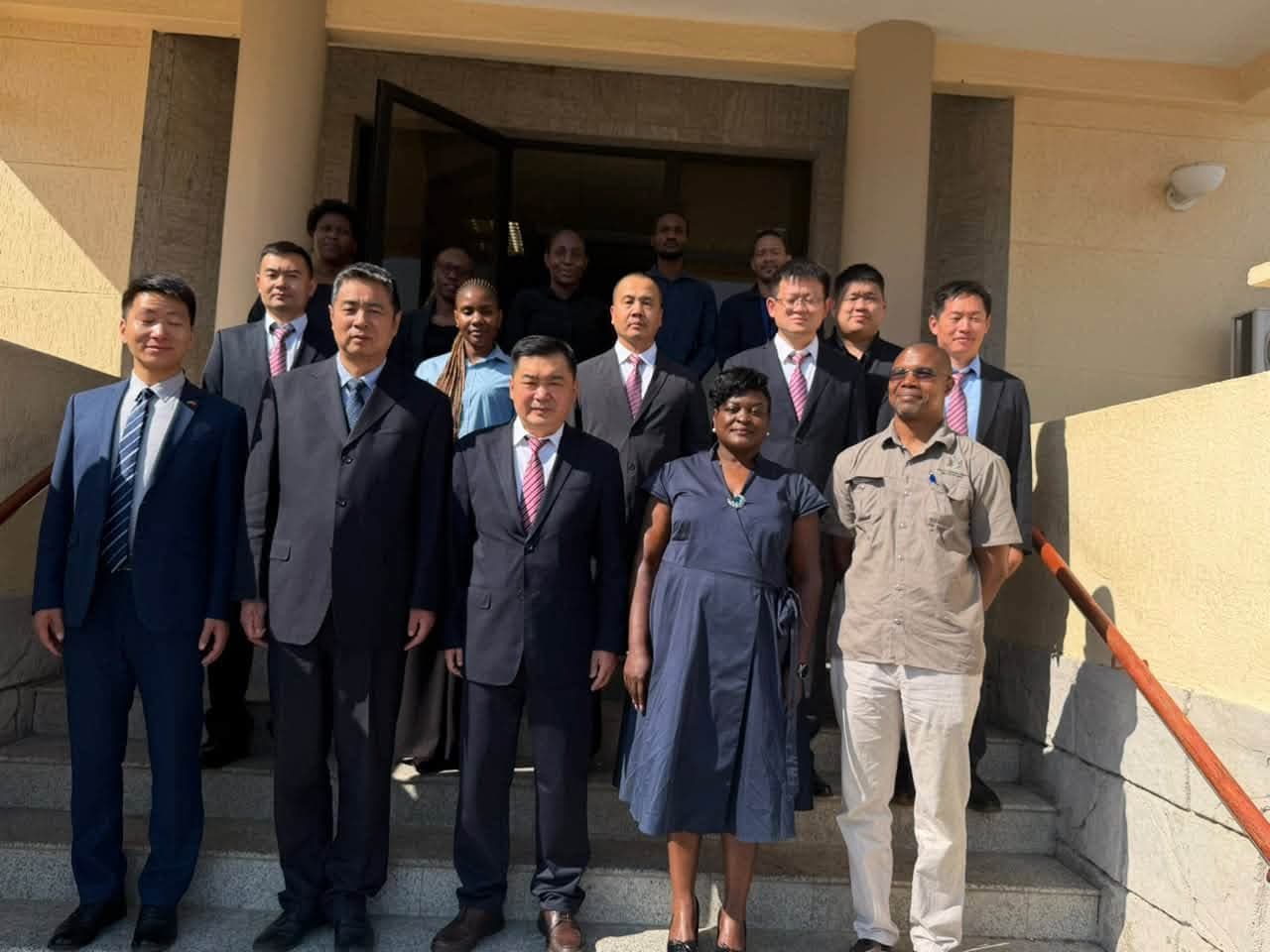
Agriculture ministry’s spokesperson Romeo Muyunda has called for calm and understanding after concerns were raised by local entrepreneurs and members of the public following the announcement of the arrival of Chinese water experts in Namibia.
A group of Chinese water experts is in the country to undertake a feasibility study on borehole drilling and groundwater development across the country’s 14 regions.
Local entrepreneurs and public members raised concerns with the Chinese delegation, saying their arrival and subsequent deployment to undertake water projects countrywide will result in the sidelining of locals, especially those in the borehole drilling business.
Muyunda, however, explained that the exercise being undertaken by Chinese experts is not a procured service by the ministry, nor are they intended to replace or compete with Namibian water and borehole drilling professionals.
“The technical experts have been offered to Namibia by the Chinese government at no cost to the Namibian government, as part of the ongoing cooperation between the two countries. The offer is also in line with the Chinese government’s contribution towards Namibia’s drought response strategy, particularly efforts aimed at identifying and strengthening potential water sources in response to the country’s water challenges,” explained Muyunda.
Namibia is a water-stressed country, and the identification, assessment and sustainable development of available water resources remain critical to strengthening water security, he stated.
“The ministry wishes to further emphasise that it recognises and values the extensive expertise available within Namibia in the fields of groundwater assessment, hydrogeology, borehole drilling and water resource development. Namibian professionals and companies continue to play an important role in the country’s water sector and are regularly engaged to provide drilling and related services across the country through the Ministry’s established procurement processes…”
“The current Chinese-supported programme should therefore not be confused with the ministry’s procurement of borehole drilling services, which continues to be offered to local suppliers. The feasibility exercise is a technical cooperation initiative offered by China and is intended to generate additional technical information on potential groundwater resources, water quality and the technical requirements for drilling in identified areas,” Muyunda added.
As part of the exercise, the Chinese experts will engage Regional Councils and relevant stakeholders and inspect areas identified for assessment.
The findings are expected to inform future planning and potential areas of cooperation between Namibia and China, including discussions towards a possible Memorandum of Understanding.
The Ministry appreciates the public interest in matters relating to Namibia’s water resources and reaffirms that all interventions will continue to be guided by the national interest, transparency, sustainability and the need to secure reliable water resources for communities across the country.
Commitment
The government remains heavily focused on emergency drought relief, water security infrastructure, and expanding groundwater development through international partnerships.
Confronting the looming severe El Niño-induced climate cycle, the government and its national water utility, NamWater, have scaled up major drilling and rehabilitation tenders across rural regions to protect communities and livestock.
In the Kunene region, through funding from the Social Security Commission (SSC)’s Corporate Social Responsibility Fund, three solar-powered boreholes were installed and are now supplying clean water to four villages in the Otuzemba, Kamajab, and Sesfontein areas.
The N$2 million project directly benefits over 800 people who previously walked up to eight kilometres daily.
Meanwhile, in the Oshikoto region, the regional leadership secured N$2.68 million from the Namport Social Investment Fund to repair existing infrastructure and drill new boreholes in water-stressed communities.
The Ohangwena Aquifer Project, supported by the German government and KfW Development Bank, is a major climate-resilient project developing 38 boreholes across 13 sites to boost long-term water security.
The Office of the Prime Minister has championed an initiative aiming to provide two boreholes per village, one for household use and one for livestock and community gardens.
Additionally, a team of international experts began a nationwide feasibility study in September 2026 to expand groundwater development across all 14 regions.
-ohembapu@nepc.com.na

Comments
No comments yet. Be the first to share your thoughts.