
Alistair “Ali” Macquarie first discovered the art of beekeeping at the age of eight, when his paternal grandfather, Thomas, introduced him to the craft.
His grandfather kept hives in Pokoinu and Betela, inspiring Macquarie to follow in his footsteps.
Over the years, Macquarie expanded his beekeeping operation to around 15 hives, most of them located behind his family home in Pokoinu.
However, Cyclone Sally (1987) destroyed much of his work when falling trees crushed many of his hives. At the time, Macquarie was also focused on his job at Air Rarotonga and the recovery efforts following the cyclone.
He returned to beekeeping during the Covid-19 pandemic and has since grown his operation to about 30 hives.
Today, he sells honey under the brand Pure Rarotonga Honey, alongside his son Tinirau, with the product available at Wigmore’s Super Store.
Macquarie hopes to expand further and has been assisting Te Pae Tanu/Ministry of Agriculture and Volunteer Service Abroad (VSA) bee advisor David Cramp in producing a book on beekeeping in the Cook Islands.
“When I first heard there was a VSA bee advisor at the Ministry, I was excited,” Macquarie shares.
He believes the long-term goal should be to encourage people in the Southern Group islands to take up beekeeping so the country can meet local demand without relying on imported honey.
“Our honey is pure with no additives,” says Macquarie. “We need to stop importing honey so we can keep diseases out.”
He also supports the establishment of a local beekeepers association.
“With an association we can encourage everyone to follow best practices, support each other and grow the industry.”
According to Macquarie, starting beekeeping is easier today, as new hive kits can be ordered and assembled locally. However, he strongly warns against importing second-hand beekeeping suits, hives, boxes or equipment due to the risk of disease.
Most bees in the Cook Islands are European honey bees.
One of the biggest threats is American foulbrood (AFB) and European foulbrood, serious bee diseases that require the entire hive to be burned if detected.
“There is no treatment. If that virus gets here, the only way to destroy it is to burn the whole hive,” says Macquarie.
He also sees wider benefits to expanding beekeeping across the country.
“The big plus side is getting away from bad sugar and using honey instead. That could help reduce non-communicable diseases,” says Macquarie, adding that honey and even bee venom are believed to have health benefits, including relief for arthritis.
During a beekeeping workshop held by Te Pae Tanu on Wednesday, Macquarie demonstrated a four-frame electric honey extractor using real honey frames.
He noted that beginners with only a few hives could start with a smaller hand-operated extractor.
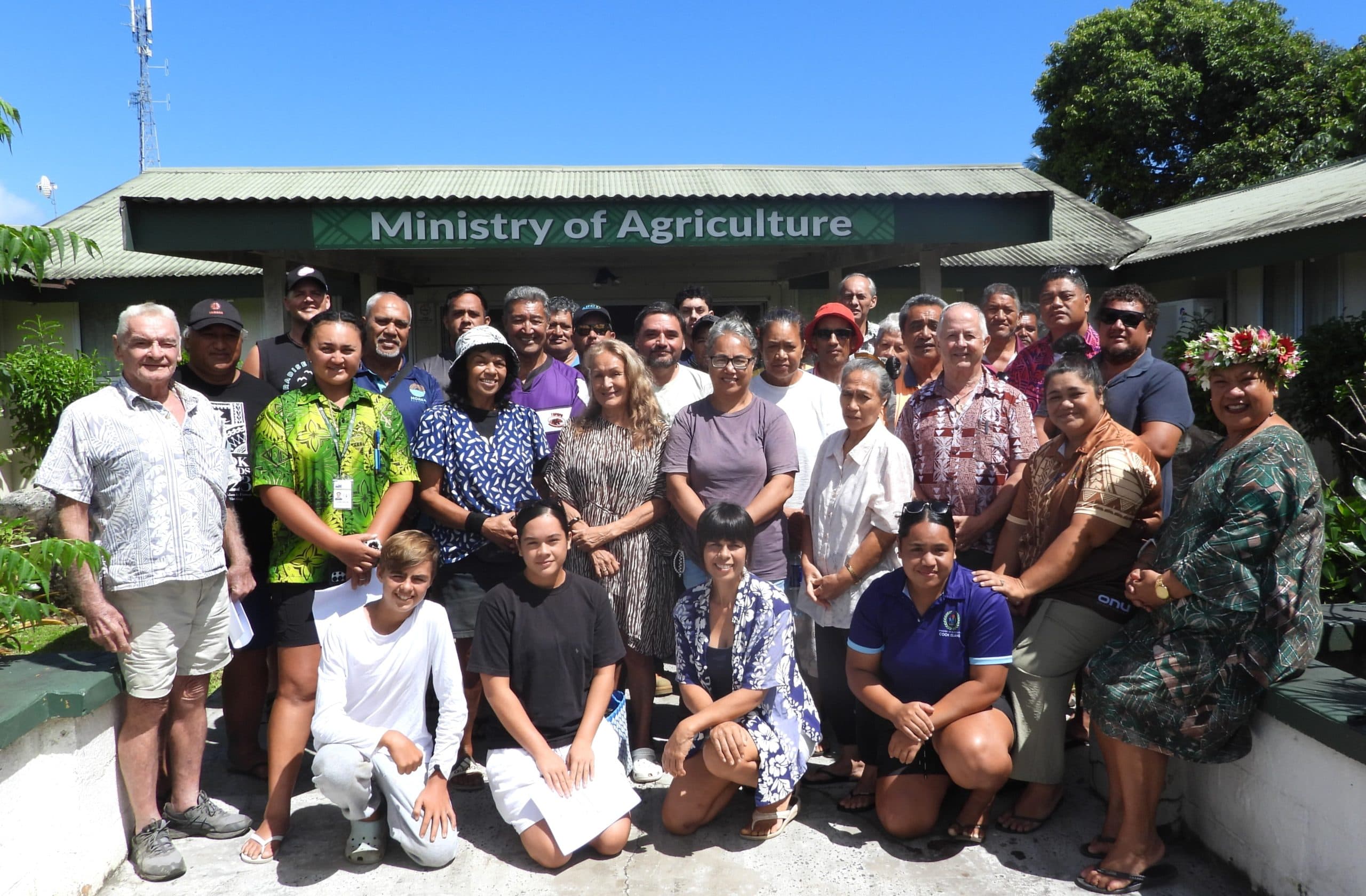
The workshop was hosted by Te Pae Tanu and led by VSA bee advisor Cramp, who has returned to Rarotonga to continue supporting the development of beekeeping in the Cook Islands and to check in with local beekeepers on hive health and disease prevention.
Cramp’s visit is a follow-up to earlier work last year aimed at strengthening beekeeping practices in the country.
He also encouraged the creation of a beekeepers association similar to one established in Tonga.
“An association can apply for funding, training and support once it is properly incorporated and recognised,” explains Cramp.
He says investigations are currently underway to confirm whether any bee diseases exist in the Cook Islands, although none are believed to be present at this stage.
“There is no varroa mite (a deadly parasite) in the Cook Islands at the moment, which is a major advantage.”
Cramp warns that bee diseases could still arrive via unexpected routes, such as foreign vessels sailing close to the island.
“If a boat passes within a kilometre or two of the islands and has a swarm of bees on board, that swarm could fly to land and bring diseases such as varroa mites.”
He also states that importing honey into a pristine environment carries significant risk, as it may contain American foulbrood spores.
Despite the risks, Cramp was encouraged by the 40 strong turnout at the workshop, including about 13 women participants.
He also offered practical advice to new beekeepers, suggesting that to prevent black ants from invading hives, hive stands should be placed in containers of water with a small amount of oil added to prevent mosquito breeding.
Workshop participants and Mangaians Jason Tuara and Taaki G Moekapiti suggest that increasing honey production could benefit both public health and agriculture.
“With non-communicable diseases high in our country, using honey instead of sugar could help our people,” they say. “Bees will also support plantations by pollinating crops and improving food production.”
Farmer Tupou Faireka also attended the workshop and shared his experience with beekeeping, which he began about 20 years ago primarily to improve pollination on his plantation.
“I wasn’t after honey at first. I wanted the bees to pollinate my crops,” Faireka shares.
Eventually he expanded to about five hives and produced around 100 kilograms of honey, which he sold through CITC and his shop, Strickfair. However, increasing work commitments meant he scaled back his operation.
Today, Faireka has one hive left but hopes to expand again.
“Honey is becoming a lifesaver. It’s great for people and look at its health benefits.”
Faireka believes a beekeepers association could also help shape policies to grow the industry and address supply shortages.
“Right now we can’t supply the demand for honey, just like we can’t supply tomatoes. We also have to import eggs because local production is not enough,” he says. “We need more people producing locally so we don’t have to import these products.”
Mata Short Hetland and Serena Cummings Tuiravakai are interested in starting their own beehives.
Hetland, now retired, researched beekeeping online and believes it will be a rewarding hobby.
“I thought this is something I could do in my retirement years,” she says. “I’ve always loved honey because of its health benefits and because it’s pure.”
She hopes to start with a single hive at home.
Both Hetland and Tuiravakai enjoyed the workshop, which included theory in the morning followed by practical demonstrations in the afternoon, where participants were able to see the hives and learn how honey is extracted.

Comments
No comments yet. Be the first to share your thoughts.