
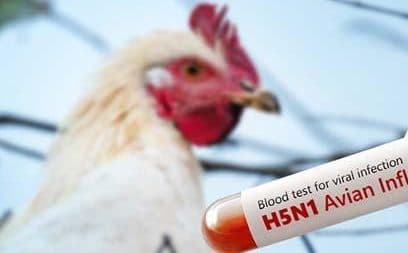
Following the discovery of H5N1 avian influenza (bird flu) in two wild birds in New Zealand, the Cook Islands Ministry of Agriculture is taking a precautionary approach by increasing public awareness.
The Ministry confirmed there are no cases of H5N1 avian influenza in the Cook Islands and stated that the “risk remains low”.
“Bird flu is a viral disease that mainly affects wild birds and poultry. Migratory birds can naturally carry avian influenza viruses over long distances, making early detection and reporting an important part of protecting the Cook Islands,” the Ministry said.
“At this stage, there is no need for public alarm. The Ministry encourages everyone to report any unusual bird deaths so that it can be investigated promptly.”
The Ministry also stated that H5N1 has not been detected in domestic poultry, such as chickens, ducks, or turkeys, and there is currently no evidence that it is spreading among poultry in New Zealand.
Secretary of Agriculture Temarama Anguna-Kamana told Cook Islands News that, based on information received, there have been two detections of H5N1 avian influenza in New Zealand to date – one in a migratory bird and the other in a native resident bird.
“If H5N1 is detected in domesticated poultry, such as chickens, turkeys, or ducks, we would expect NZMPI to notify us through the appropriate official channels,” Anguna-Kamana said.
She said that depending on the epidemiological situation and the control measures implemented, “we may need to consider suspending imports of poultry meat and poultry products from affected areas until the outbreak is brought under control, or alternatively restrict imports to H5N1-free area”.
Anguna-Kamana said this would be similar to the approach taken on the importation of Day Old Chicks (DOC) from NZ in response to the Highly Pathogenic Avian Influenza (HPAI) and the Egg Drop Syndrome.
“For Cook Islands, migratory birds is an important consideration because they can potentially introduce or spread Avian influenza viruses and other avian diseases,” she said.
“Although the overall risk of disease introduction by migratory birds is generally lower than that posed by imported animals or animal products, migratory birds are recognised as a natural pathway for the movement of pests and diseases between countries.”
The Ministry will work with Te Marae Ora (TMO), the National Environment Service (NES), and partners to monitor the situation, including Te Ipukarea Society.
“We will continue to rely on NES and Te Ipukarea Society to monitor and report any unusual mortality or disease events among wild birds, particularly the nesting seabird populations and other birds they routinely observe in the high-altitude mountains of Rarotonga,” Anguna-Kamana said.


Comments
No comments yet. Be the first to share your thoughts.