
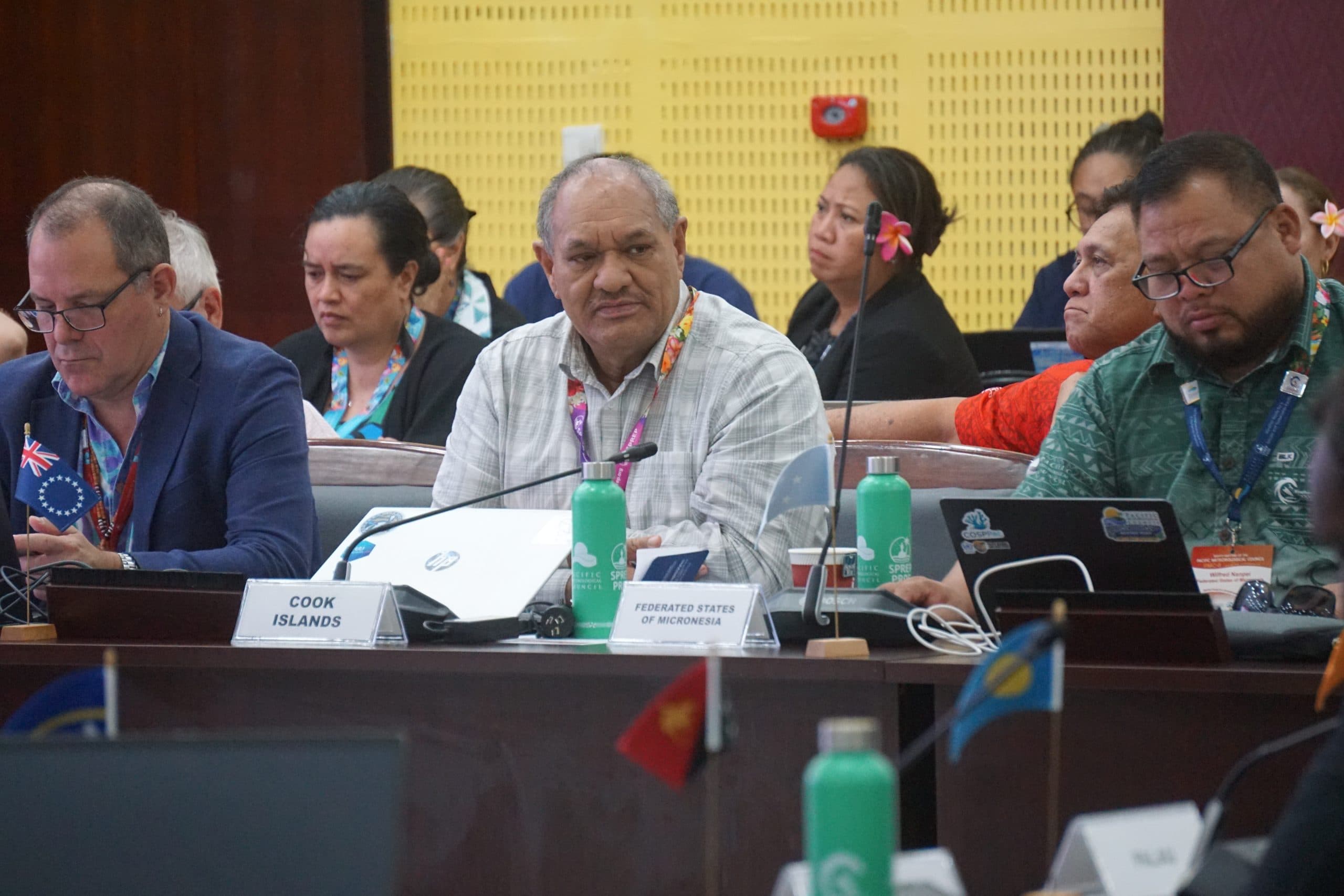
Director Maara Vaiimene told the Eighth Pacific Meteorological Council meeting in Nuku’alofa, Tonga, that a regional assessment presented to the meeting indicated El Niño was expected to continue and could become stronger.
“The status is, it will continue, and it will probably be strengthened,” Vaiimene said.
The warning comes as the Cook Islands moves towards November and December, when rainfall would normally begin to increase.
Vaiimene said the dry season had already been unusually dry, with monthly rainfall dropping below 50 millimetres, and there was concern that the expected seasonal increase may not occur.
“However, based on the forecast for El Nino, that may not happen,” he said. “If El Niño continues in November, December, then our rainy season is delayed.”
That could mean the dry conditions continue into the wet season, putting additional pressure on water supplies and agriculture.
“So the dry season will continue into our wet season which means (in) two months of the wet season, we’ll probably get below average rainfall,” Vaiimene said.
The El Niño regional update presented at the regional meeting also highlights the historical link between El Niño and tropical cyclone activity in the Cook Islands.
The document says the Cook Islands has historically experienced increased cyclone frequency during El Niño years, recording an average of 15 cyclones per decade compared with six during La Nina years.
It explains that El Niño shifts the pool of warm surface water towards the central and eastern Pacific, moving the environment favourable for cyclone development further east.
The update states that understanding these shifts is important for early warning and preparedness, including protecting lives, infrastructure, crops and water resources.
For the Cook Islands, Vaiimene said the rainfall impacts of El Niño are not expected to be the same across the country.
The Northern Cook Islands generally receives more rainfall during El Niño, while the Southern Cook Islands can experience drier conditions.
That makes water preparedness particularly important for communities already experiencing lower rainfall.
Vaiimene urged households and farmers to focus on collecting and conserving water before conditions become more difficult.
“It’s to ensure that you have good rainwater harvesting, and secondly, is water conservation.”
He said households should make sure their water tanks and spouting systems are working properly and that catchments are capable of collecting as much rainfall as possible.
Water conservation will also be important in agriculture, particularly if the dry conditions persist.
The Meteorological Service produces monthly climate and ocean products, including rainfall outlooks and sea-surface temperature outlooks, which are shared publicly.
But Vaiimene acknowledged that communicating the significance of the information remains a challenge.
El Niño was declared in June, but Vaiimene said the warning did not necessarily reach the people who needed to act on it.
“But I think that’s our gaps,” he said. “Our gaps are that we haven’t been proactive in informing the public.”
He said the Meteorological Service needs stronger engagement with communities, the media and government so that climate information is translated into practical action.
The latest regional assessment has strengthened the Meteorological Service’s own concerns about the months ahead.
Vaiimene said the information presented in Tonga supports the Cook Islands’ own El Niño products and provides a stronger basis for advising the government.
After returning home, he expects the issue to be taken forward through government.
“So, after this meeting, we will have to go back and make a Cabinet submission to advise.”
For communities, Vaiimene warned to prepare for the possibility of a prolonged dry period while also remaining alert to the increased cyclone risk associated with El Niño.
The El Niño update also states that the purpose of understanding these shifts is to provide advance warning that can help protect lives, economies and essential infrastructure.

Comments
No comments yet. Be the first to share your thoughts.