
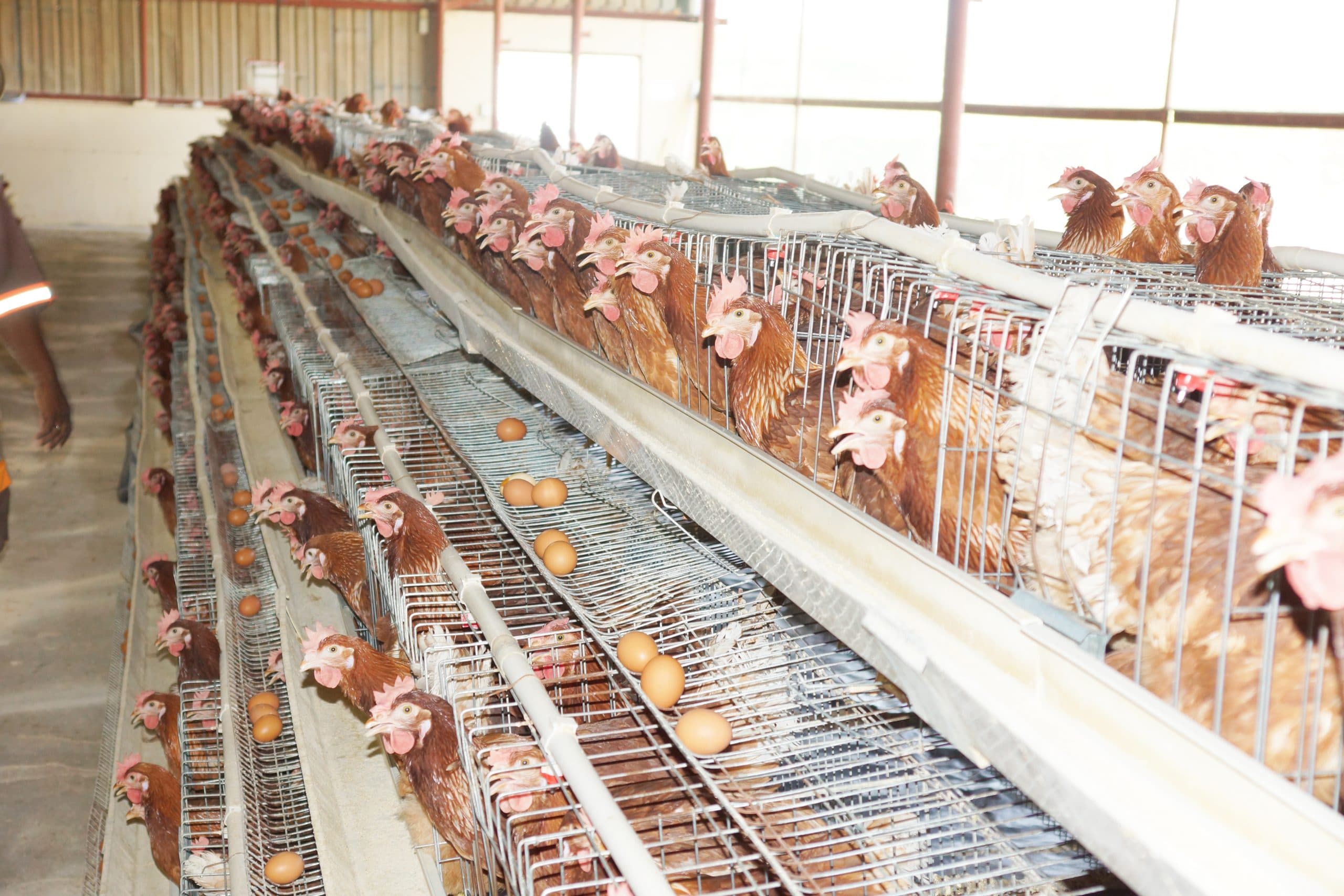
The success of any poultry production enterprise is significantly influenced by the health measures implemented by the farmer to ensure the continual safety of the bird enterprise.
Sometimes, farmers without a health programme expose their ventures to problems such as bird ailments, mortality and retarded or stunted growth.
Developing a simple but effective health programme for birds is a key factor in poultry farming, and it usually begins with implementing biosecurity measures.
The first measure usually involves fencing off the area around the chicken coop (s) to restrict access.
This is followed by the setup of a disinfecting station, a footbath, and a handwash, comprising water-based disinfectants such as Viral Kill, F10 SC Veterinary Disinfectant, or Logisan, at the entrance of the premises. Wildlife Additionally, a vaccination programme must be established for the poultry enterprise to prevent diseases and avoid production interruptions on the farm. Identifying and knowing the diseases affecting poultry is essential.
Some of the common poultry diseases found in Namibia are Newcastle disease, Infectious Bronchitis, Infectious Coryza, and Infectious Bursal Disease (Gumboro disease).
HealthConditions
Occasionally, there are outbreaks of Avian Influenza; therefore, the vaccination programme should cover these diseases as well.
Farmers must ensure that, at 1 day old, chicks are vaccinated against Newcastle Disease and Gumboro Disease using ND Clone 30 and Gumboro D78, either in drinking water or by coarse spray via eye drops or mist spray on their heads.
A week later, when the chicks are about 7 days old, they can be vaccinated against Infectious Bronchitis by using the IB Ma5 vaccine via drinking water or a coarse spray on their heads.
After a period of one to two weeks, it is recommended to administer the booster vaccines via drinking water, a fine or coarse spray, or eye drops.
The chickens can be given a second dose of ND Clone 30 to prevent Newcastle Disease, IB Ma5 to prevent Infectious Bronchitis, and Gumboro D78 to prevent Bursal Infectious (Gumboro) Disease.
At day 35, chickens must be administered 0.5 ml of Nobilis Coryza subcutaneously (under the skin) into the lower part of the back of the neck to prevent Infectious Coryza. This can be repeated after four weeks to ensure full immunity against Infectious Coryza. Agriculture& Forestry
To enhance the health programme on a poultry farm, farmers are advised to always stock up on antimicrobial remedies such as SWA-DOXY-MYCIN, Doxy Maxx 50%, Doxycip 50%, and Pulmdox 50 OSP, which can be used to treat common bacterial respiratory diseases and gastrointestinal infections. As a precautionary measure, farmers are advised to construct sick bays (isolation centres) where all birds with clinical signs of disease can be kept to minimise the spread of contagious poultry diseases within the flock.
Parasite control remedies are also necessary when designing a health programme. Therefore, it is also vital to stock up on remedies such as Piperazine to control internal parasites and Karbadust to fend off ticks and other external parasites, thereby enabling birds to experience minimal stress.
In addition, farmers must include supplements in their health programme. Supplements such as Opti-boost, Carmino + and Stresspac help meet the nutritional requirements of their birds by providing much-needed trace elements, including Iron, Calcium, and a range of vitamins and other minerals. Furthermore, once the birds’ production cycle is complete, farmers must sterilise and disinfect the coops before introducing a new group of birds to the same housing structures.
Implementing a good health programme is a farmer’s gateway to viable, profitable poultry farming, as it serves as a protective measure against diseases that can significantly impact production.
*Hanks Saisai is Agribank’s technical advisor on crops and poultry.


Comments
No comments yet. Be the first to share your thoughts.