
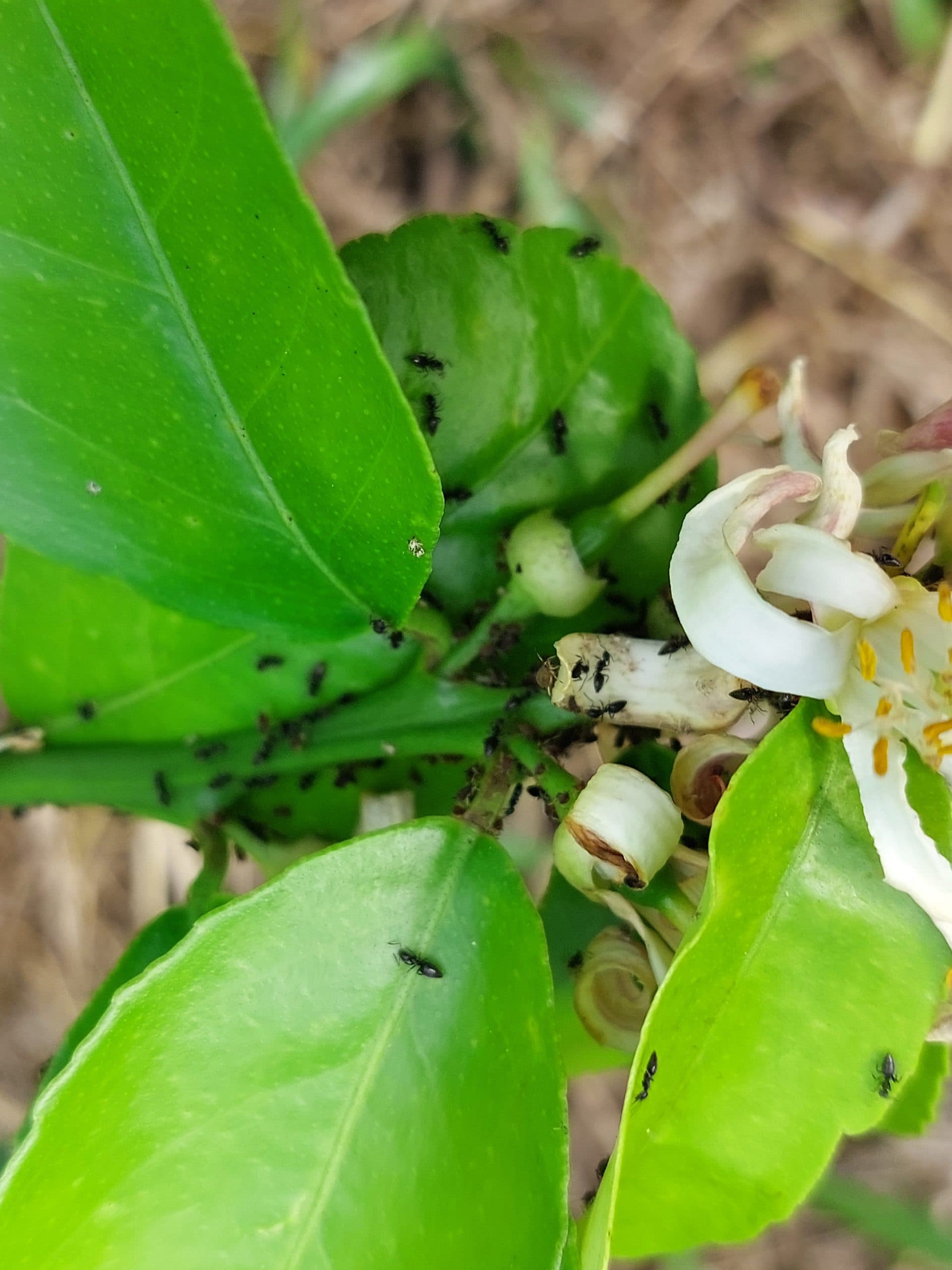
The Ministry of Agriculture has confirmed that increased ant activity reported by growers across the island involves a species that has long been present in the Cook Islands, but is now causing more visible and damaging impacts on crops and coconut trees.
Head of the Ministry of Agriculture, Temarama Anguna-Kamana, said field assessments were carried out to verify the species involved, with samples and photographic records examined by technical experts, including specialists from Plant Health and Environmental Laboratory New Zealand (PHEL).
“The Ministry of Agriculture acknowledges concerns raised by growers regarding increased ant activity affecting food crops and coconut trees on the island,” Anguna-Kamana added.
The acknowledgement follows concerns raised by a grower, who spoke on the condition of anonymity, that a “new ant” is destroying food crops and killing coconut trees while the Ministry of Agriculture “runs around in circles”.
“On my plantation, it has destroyed my summer coffee crop, as well as my grapefruit crop for 26, nearly killed a carambola tree, killed one coconut tree. I am now keeping it at bay by spraying with a noxious chemical every week but poisoning our bees in the process,” the grower said.
Based on the assessments, Anguna-Kamana said the ants were identified as belonging to the Technomyrmex genus, commonly known as white-footed ants.
“Recent collections from Rarotonga and other islands confirm the ongoing presence of these ants, but this is not a new species; what has emerged is more noticeable and damaging activity than previously recorded,” Anguna-Kamana said.
She said identifying the ants to species level remains challenging, but historical records show related species have been present in the Cook Islands since at least 1967.
Records from the Natural Heritage Database indicate Technomyrmex vitiensis was present in Pukapuka in 2003, while some earlier records previously identified as T. albipes have since been re-evaluated as T. vitiensis.
According to the Ministry, the recent increase in visibility and impact is likely influenced by factors such as climate conditions and changes in local ecosystems.
The other grower who has noticed changes on his farm is Danny Mataroa, who said he first became aware of the issue after observing unusual activity on his trees.
“They’re not the red ants, they’re the black ants. They seem to be like destroying the flowers before they come out,” Mataroa said.
He said the impact was initially thought to be isolated, but conversations with other growers revealed the issue was more widespread.
“Well, actually, it’s only recently that I’ve noticed that a lot of people are having that. I thought it was just an isolated event,” he said.
“There’s a couple of us growers that have been talking about it but I didn’t know that a lot of other farmers were also affected.”
Mataroa said he has particularly noticed reduced flowering on his orange trees.
“I’m just noticing on my orange trees. That they haven’t been flowering,” he said. “Those that’s been flowering, it’s less flowers now.”
He confirmed this was the first time he had experienced the issue and said while he had not definitively linked the damage to ants, the increase in ant numbers was noticeable.
“I haven’t pinpointed that if it’s the ants, but I have noticed that there has been an increase of ants and even around spots, normally you get them under trees or a colony in one area. They seem to be all over the place now,” Mataroa said.
Anguna-Kamana said Technomyrmex ants do not pose a direct threat to people or animals.
“It is important to clarify that Technomyrmex ants do not bite humans or animals,” she said.
However, she said the ants can indirectly affect crops by protecting sap-sucking insects such as scale insects, mealybugs and aphids in exchange for honeydew, increasing pest pressure on crops and trees if left unmanaged.
While natural predators such as ladybirds feed on these pests, Anguna-Kamana said current populations are not sufficient to control ant-associated activity on their own.
Field assessments and sample collections from affected planting areas are continuing, with the Ministry focusing on understanding the distribution and abundance of Technomyrmex species, their interactions with crops and coconut trees, and the factors contributing to increased activity.
The Ministry is also providing guidance to growers and working with regional partners and technical experts to improve long-term management across agricultural, commercial and residential settings.
Mataroa said the situation is concerning if it worsens and spreads to other crops.
“If it becomes a problem, then we need to address it early,” he said. “We need to look at it seriously.”
He cautioned against rushing to introduce biological controls without careful consideration, noting past experiences where introduced species created new problems.
“We need to look at ways of how we can control this,” he said.
While his main concern has been his orange trees, Mataroa said he has noticed ants across other crops and farming areas.
He said watermelon crops also attract increased insect activity, although regular spraying has helped manage the problem.
Mataroa added that ants are particularly noticeable in ploughed fields and around areas where wood has been left on the ground, possibly driven by hot, dry conditions.
The Ministry has advised growers that locally available pest management options exist, including professional services through Henry Wichman or private contractor Strike Out Pest Control Services.
Retail outlets such as CITC and Vonnia’s also stock ant control products including boric acid ant baits and ant sand.
Local taro farmer, Tangi Tauira, says regular monitoring and early intervention are critical in preventing ant infestations from causing serious damage to crops.
She said pest control should not only happen once a problem is clearly visible, but through preventative treatment and good farm hygiene practices.
“For us, regular monitoring and timely spraying help prevent infestations from getting out of control,” Tauira said, adding that any spraying must be done responsibly and in line with agricultural guidelines using approved products.
Tauira said her plantation has dealt with ant and other insect issues in the past, but the impact was limited because problems were identified early.
Keeping plantation areas clean, removing overgrown weeds in swamp and planting areas, and reducing nesting spaces for pests were key measures that helped stop the issue from spreading.
She warned that if infestations worsen, they could affect crop quality, increase disease spread and delay harvesting timelines, with wider consequences for taro production.
“If the problem worsens, it could affect crop quality and harvesting timelines,” she said.
Tauira encouraged farmers to regularly check their crops, share information and act quickly when issues appear.
She also called for stronger collaboration with the Ministry including access to approved treatments, early-warning systems and more frequent on-site visits to farmers’ plantations to provide practical advice and support.
Anguna-Kamana said continued vigilance is important, and travellers are urged to check baggage carefully for hitchhiking ants when travelling overseas and upon arrival in the Cook Islands.
She said the Ministry will continue site inspections, surveillance and public updates as further findings and management results become available.

Comments
No comments yet. Be the first to share your thoughts.