
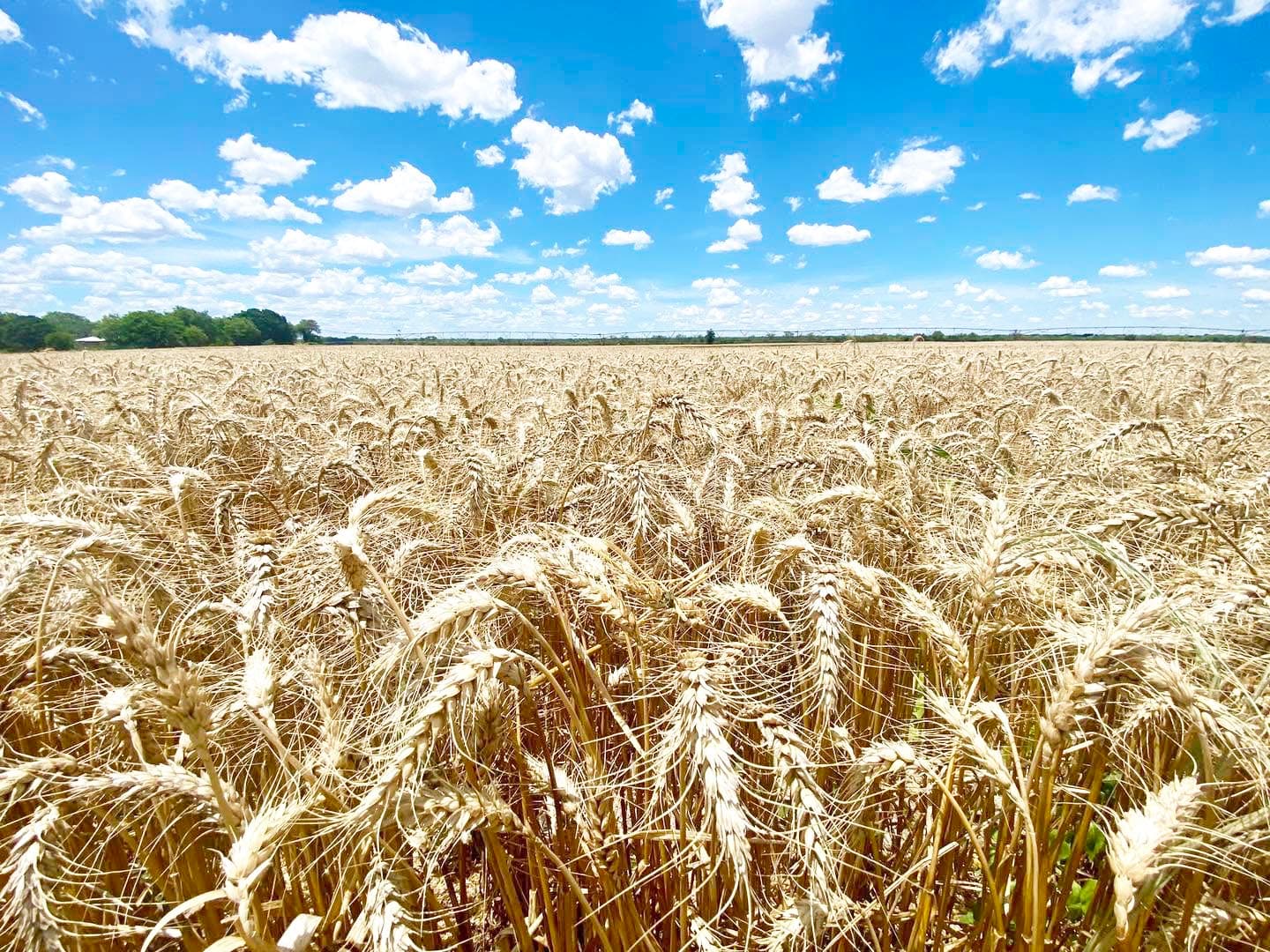
The government, through the Office of the Prime Minister, has assured grain farmers countrywide that their concerns regarding the absence of a reliable market for their products will be addressed promptly.
Crop farmers in the Zambezi, Otjozondjupa, Omaheke and other regions have, for the past few months, expressed concern about a lack of a dependable, lucrative and long-term buyer for their grain and related products.
Namibia’s grain farmers are experiencing severe challenges accessing reliable markets, primarily caused by weak domestic processing value chains, insufficient decentralised storage networks, and a lack of integrated off-take coordination between public institutions and local producers.
While the country is targeting 80% national food self-sufficiency by 2030, a persistent pipeline disconnect means that successful harvests frequently result in local surplus waste rather than financial returns.
Major producing regions face a severe shortage of localised processing facilities. For instance, in the Zambezi region, grain farmers have reported harvesting substantial yields but are bottlenecked because only one active commercial miller is available to buy local grain.
Most farmers have reported harvesting substantial quantities of grain but are struggling to find buyers, raising fears over potential post-harvest losses.
One maize farmer in the Zambezi region, Richard Kambinda, disclosed that he harvested over 90 tons of maize, which is currently stored under suboptimal conditions.
“We only have one miller right now who is buying. And I’m not sure if he can buy all the maize. Where we are now, we are almost at the end of August, and this maize cannot be stored like this,” Kambinda stated.
The situation has prompted intervention from Zambezi governor Dorothy Kabula, who urged farmers to exercise patience as government is working around the clock to address the issue.
“As I’m talking to you right now, the issue has reached the Office of the Prime Minister, and they have already engaged all stakeholders to ensure that all the grain across the country is bought and stored properly,” she explained.
Kabula emphasised the government’s awareness of the looming challenges posed by climate variability, particularly the threat of El Niño.
“As you know, this year we might not even get enough rain. We are hearing of El Niño; therefore, the government is not ignoring it. Our people should be patient a little bit as solutions are coming,” she added.
Government agencies are coordinating an immediate countrywide buyout of surplus grain to stock national food security reserves, a move expedited by looming El Niño climate threats.
To shield local farmers from external market saturation, the Namibian Agronomic Board (NAB) has also been tasked with strictly enforcing complete closure windows on foreign grain imports (such as white maize and wheat) when local harvests are in season.
Challenges
Due to delayed off-take agreements, mass quantities of harvested white maize and pearl millet (mahangu) are kept under poor, temporary storage conditions. This exposes the grain to spoilage, reducing its commercial grade before it can reach formal markets.
Transporting heavy grain from remote, rain-fed communal areas to urban commercial centres remains economically non-viable for small-scale farmers due to inadequate logistical corridors and high fuel costs. While production volumes have increased, the lack of immediate value addition, milling, and preservation facilities translates directly into post-harvest food waste and suppressed farmer earnings.
-ohembapu@nepc.com.na


Comments
No comments yet. Be the first to share your thoughts.