
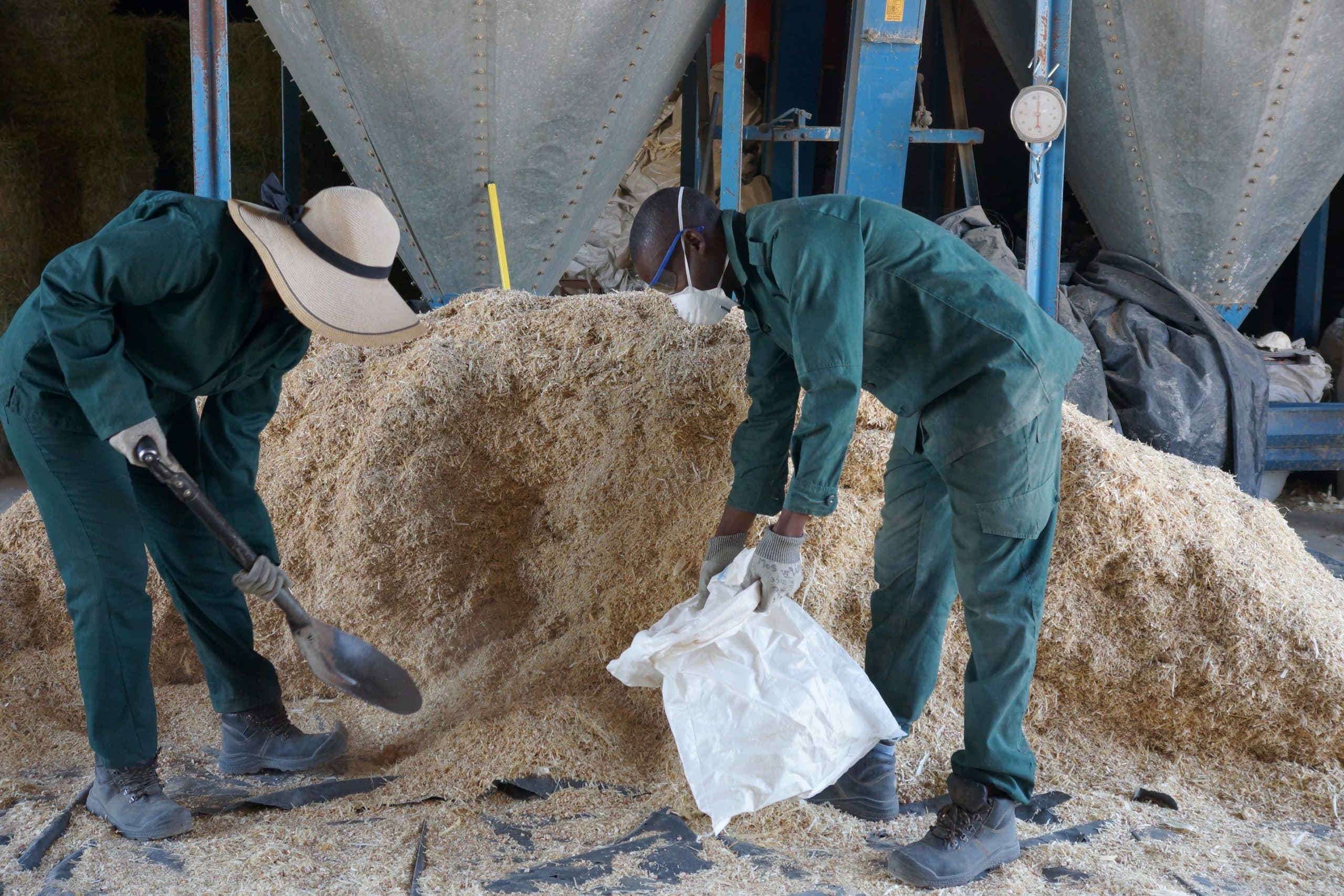
As part of efforts to drive economic development and unlock the region’s full potential, Prime Minister Elijah Ngurare recently unveiled plans to establish a watermelon processing plant in the Kavango East region.
Speaking on the sidelines of the Rundu Trade Fair, Ngurare said the project is still at its early stages, with the Sambyu Traditional Authority having already allocated land for the proposed facility.
The Office of the Prime Minister, in collaboration with the University of Namibia (Unam), is currently laying the groundwork to ensure the project’s realisation.
He also shared that Unam’s campus in the Zambezi region has completed a prototype and sample testing for mango juice production.
The project has now moved to the procurement stage, with the process underway to identify contractors to establish the processing facility in that region.
The initiatives form part of broader efforts to promote value addition, local production, job creation and economic opportunities within Namibia’s 14 regions, ensuring that local agricultural products are processed locally rather than being sold as raw produce.
Value addition
The government is currently rolling out an aggressive industrialisation initiative known as the ‘14-Region Factory Plan’, driven by President Netumbo Nandi-Ndaitwah’s directive for every region to establish a decentralised manufacturing or processing plant aligned with its local resource strengths and comparative economic advantages.
The primary operational focus across these regions is centred on agro-processing, livestock value addition, and certified seed production to achieve 80% local food self-sufficiency by 2030, as set out in the sixth National Development Plan (NDP6).
Under the Namibia Agriculture Mechanisation and Seed Improvement Project (NAMSIP), the government has funded five “full-house” seed processing plants to support local grain and cereal sectors.
This includes projects in the Zambezi, Kavango West, Omusati, Kavango East and Oshikoto regions, which are home to a grain and seed processing facility built at the Okashana Research Station.
Meanwhile, livestock processing plants are primarily targeted at the central, western, and southern regions, where large-scale cattle, goat, and sheep production thrive, with the government planning to set up such plants in the Omaheke and Otjozondjupa regions.
The two regions are known as primary cattle corridors, and the plan is to establish plants to serve as regional abattoirs and specialised processing facilities focused on chilled/frozen carcasses, biltong, sausages, and premium packaged meats for export to Europe and the Middle East. Moving beyond cattle, Omaheke has advanced plans to establish a specialised peanut processing plant. The plant will process local raw peanuts directly into peanut butter, cooking oil, and other peanut products to curb the export of raw commodities.
For Erongo and Khomas regions, plans are underway to set up highly industrialised hubs to process heavy secondary commodities, such as fish and maritime products along the coast, with Khomas serving as a centralised, multi-resource assembly and agro-packaging centre.
Ngurare said this regional layout aligns with Namibia’s broader national policy regarding resources, adding that the eighth administration has taken a firm stance on critical minerals, which will require foreign investors to set up domestic processing facilities rather than exporting raw materials.
By combining localised agro-processing for youth and cooperatives with domestic mineral processing, Namibia aims to unlock billions in new economic activity.
-ohembapu@nepc.com.na

Comments
No comments yet. Be the first to share your thoughts.