
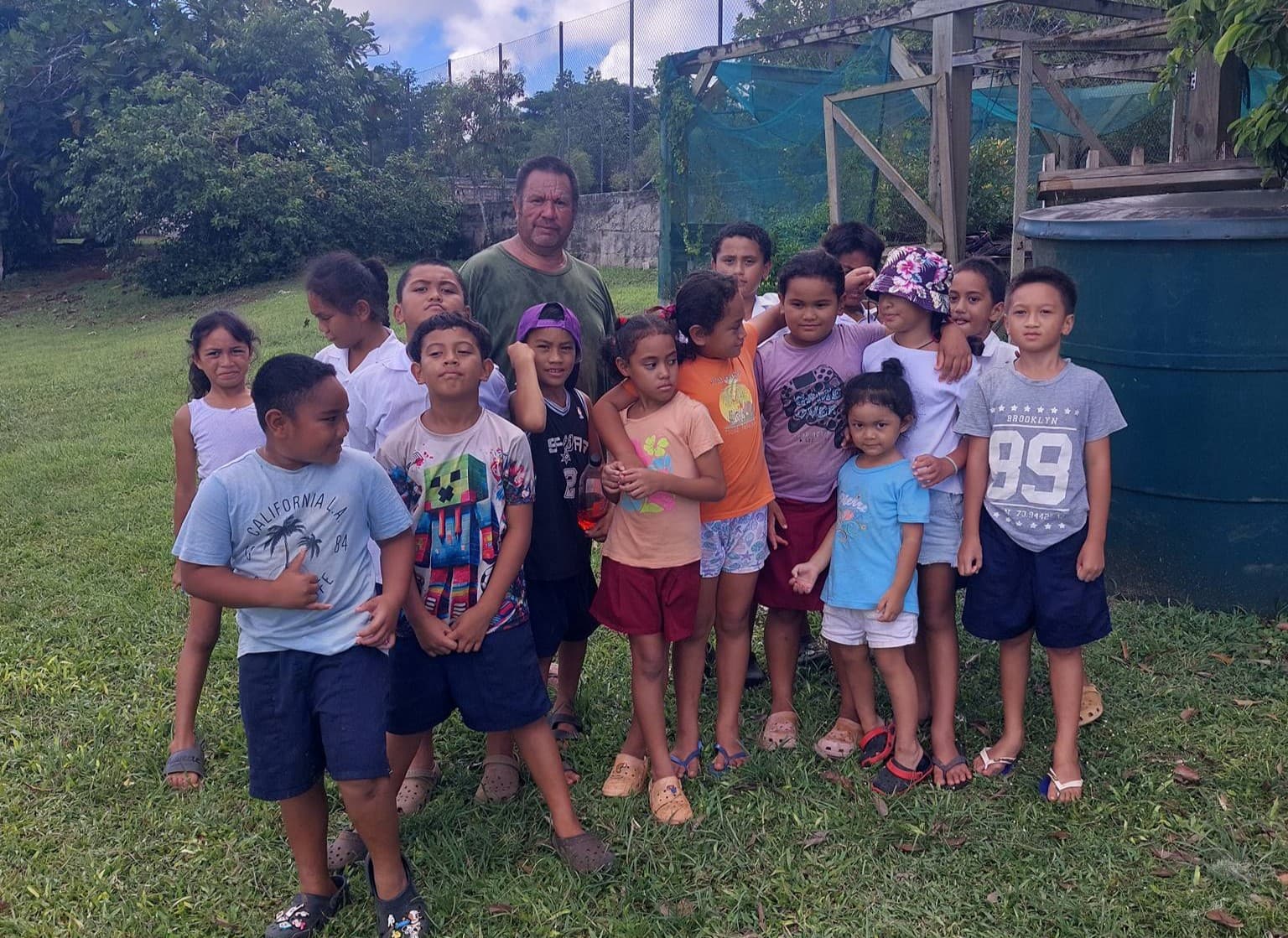
The initiative provides hands-on learning through the planning, planting and maintenance of their own garden.
This practical approach allows the students, who are now on a two-week break, to connect key scientific concepts, such as ecosystems and plant life cycles with real-life experience.
School teacher Enis George-Ngatokorua said the project is important because it teaches valuable life skills outside the classroom.
“Students learn responsibility, care and the importance of looking after something they have nurtured themselves,” George-Ngatokorua said earlier this month. “They take pride in their work and look forward to their daily tasks, especially watering and checking on their plants. There is also a strong sense of anticipation as they wait to harvest what they have grown.”
Students initiated the planning and theoretical components of the project during the sixth week of the term. The planting phase commenced in week nine.
This project also received significant support from the agriculture department in Mangaia, which greatly strengthened the practical elements of the initiative.
“We are fortunate to have had Mr. Tuara Tuara (affectionately known as Papa G by the students) join us for an incursion. He conducted both classroom sessions and hands-on activities,” George-Ngatokorua said.
“Students worked together to clean and prepare the greenhouse, and he guided them through planting silver beet (tinapi), including selecting appropriate soil and proper planting techniques.”
George-Ngatokorua said the students are particularly excited and motivated after seeing the results of their efforts through the growth of the plants.
The primary objective for the vegetable garden project is to provide students with a comprehensive understanding of ecosystems through hands-on learning. Key focus areas include garden food chains and plant life cycles. Most importantly, the initiative aims to educate students on crops specific to Mangaia, fostering a connection with traditional agricultural practices.
George-Ngatokorua explained that the long-term goal for this project is to expand the variety of plants grown in the greenhouse.
“Given the students’ enthusiasm, we plan to continue the project throughout terms 2, 3 and 4. We will also look into sourcing additional seeds and resources to support the ongoing development of the garden. This is very much a work in progress, with strong potential for growth.”
According to George-Ngatokorua, this initiative shares the importance of learning life skills beyond the classroom, as students learn responsibility and care while also developing a sense of anticipation as they wait to harvest what they have grown.
“Ultimately, the garden provides a meaningful learning experience that connects science, culture and everyday life,” she said.
“We also hope to celebrate the harvest by preparing a shared meal, allowing students to enjoy the fruits of their labour together.”

Comments
No comments yet. Be the first to share your thoughts.