
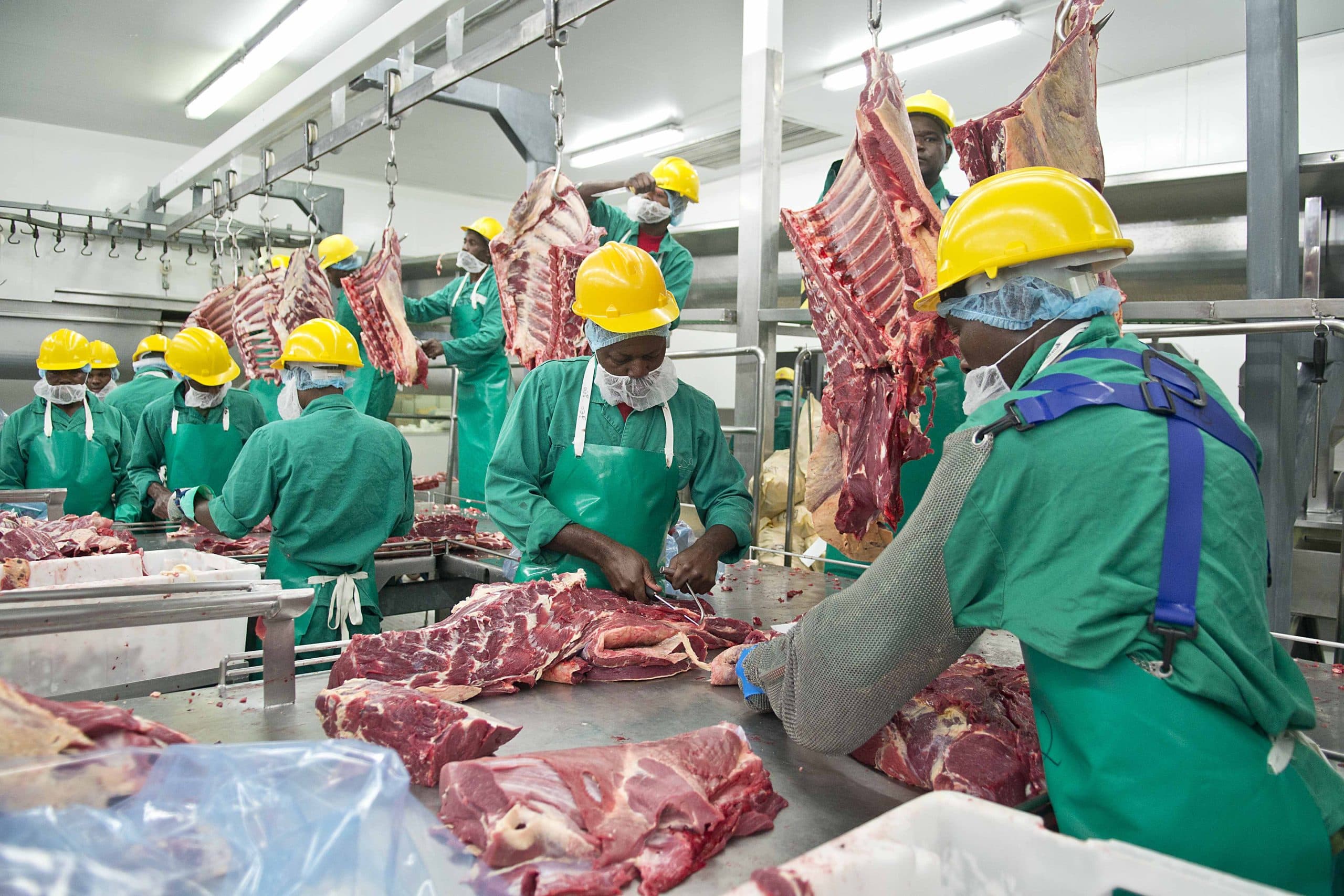
Agriculture minister Inge Zaamwani recently conducted a strategic visit to Meatco to review implementation of the Northern Communal Areas (NCA) strategic roadmap and assess progress toward enhancing market access for communal livestock producers.
During the visit, Zaamwani received an update on the roadmap of Meatco’s NCA subsidiary, which aims to reposition the Corporation’s activities north of the Veterinary Cordon Fence.
The plan focuses on establishing a more sustainable and targeted operational model across key abattoirs in Oshakati, Rundu, Outapi, and Eenhana.
The strategic roadmap emphasises livestock procurement and aggregation, improved market access for communal producers, alignment of processing capacity with livestock availability, and the development of sustainable domestic and export routes to market.
These initiatives are designed to strengthen Meatco’s role in supporting communal livestock producers in the northern regions and to ensure access to reliable, competitive formal markets.
According to the 2023 livestock census, the NCA area is home to approximately one million cattle, of which about 30% are slaughter-ready. The new strategy aims to ensure that these animals reach formal markets.
Zaamwani’s visit also focused on plans to operationalise the Oshakati Abattoir, a key component of the NCA’s roadmap.
“My team and I are visiting Meatco today to fast-track any outstanding operational matters requiring the Corporation’s and the ministry’s attention. We also aim to strengthen coordination and ensure that agreed actions are implemented efficiently and without further delay, for the benefit of the producers and the country,” the minister explained.
Meatco’s approach focuses on securing an adequate livestock supply, sustainable throughput, appropriate processing capacity, and clearly defined markets to support the facility’s successful integration into the value chain.
Meanwhile, Meatco’s CEO Albertus !Aochamub said that Meatco’s commitment to translating recent progress into a sustainable business model that benefits producers and the nation remains strong.
“The progress we are seeing shows that Meatco can recover and compete when we maintain commercial discipline, secure the livestock supply, and maximise the value of our market access. Our task now is to consolidate these gains while addressing the remaining structural challenges, particularly in the NCA,” !Aochamub stated.
He further explained that the Oshakati abattoir’s operationalisation should be seen as part of a broader value-chain intervention rather than merely reopening another facility.
“Our objective is not merely to operate an abattoir. We need to build a functioning value chain that links communal farmers to livestock aggregation, processing, and sustainable markets. Ultimately, our success will be measured by whether we create better, more reliable market opportunities for our producers,” said !Aochamub.
Opportunities
Over the years, Meatco has been actively diversifying its export footprint across strategic Central and West African markets to reduce its historical reliance on traditional European buyers and to create stable, high yield revenue streams.
This expansion provides a major operational avenue to absorb livestock from local producers and to leverage newly opened regional trade corridors.
Meatco has established high-priority trade partnerships to facilitate major beef exports to Congo Brazzaville, the Democratic Republic of Congo (DRC), Ghana, Angola, and Tanzania.
This expansion relies heavily on the African Continental Free Trade Area (AfCFTA) framework, enabling Meatco to move large volumes of premium beef into dense, lucrative consumer markets across the continent.
Opening Central African channels provides a reliable economic outlet for cattle farmers operating north of the Veterinary Cordon Fence, and this will, in turn, directly stabilise the northern red meat industry and protect the livelihoods of communal livestock producers.
Beyond meat
Under !Aochamub, Meatco has successfully stabilised its operations, transitioning from heavy historical losses to a profitable position, and has recorded a notable surge in its year-to-date financial and operational performance, reaching over N$793.20 million in revenue.
The latest figures also reflect Meatco’s strong market conditions and strategic operational improvements, with a 56% increase compared with the same period last year, surpassing initial budget projections.
The company also recorded a gross profit of N$106 million, a significant turnaround from the N$2.27 million reported in the prior year.
In addition to meat, Meatco’s Okapuka Tannery completed its first historic leather export of wet-blue hides to Mombasa, Kenya, under the AfCFTA framework.
The entity is advancing investment negotiations with the Arab Bank for Economic Development in Africa (BADEA) to secure funding to modernise its canning facilities, value chain, and small-stock abattoirs.


Comments
No comments yet. Be the first to share your thoughts.