
Adolf Kaure
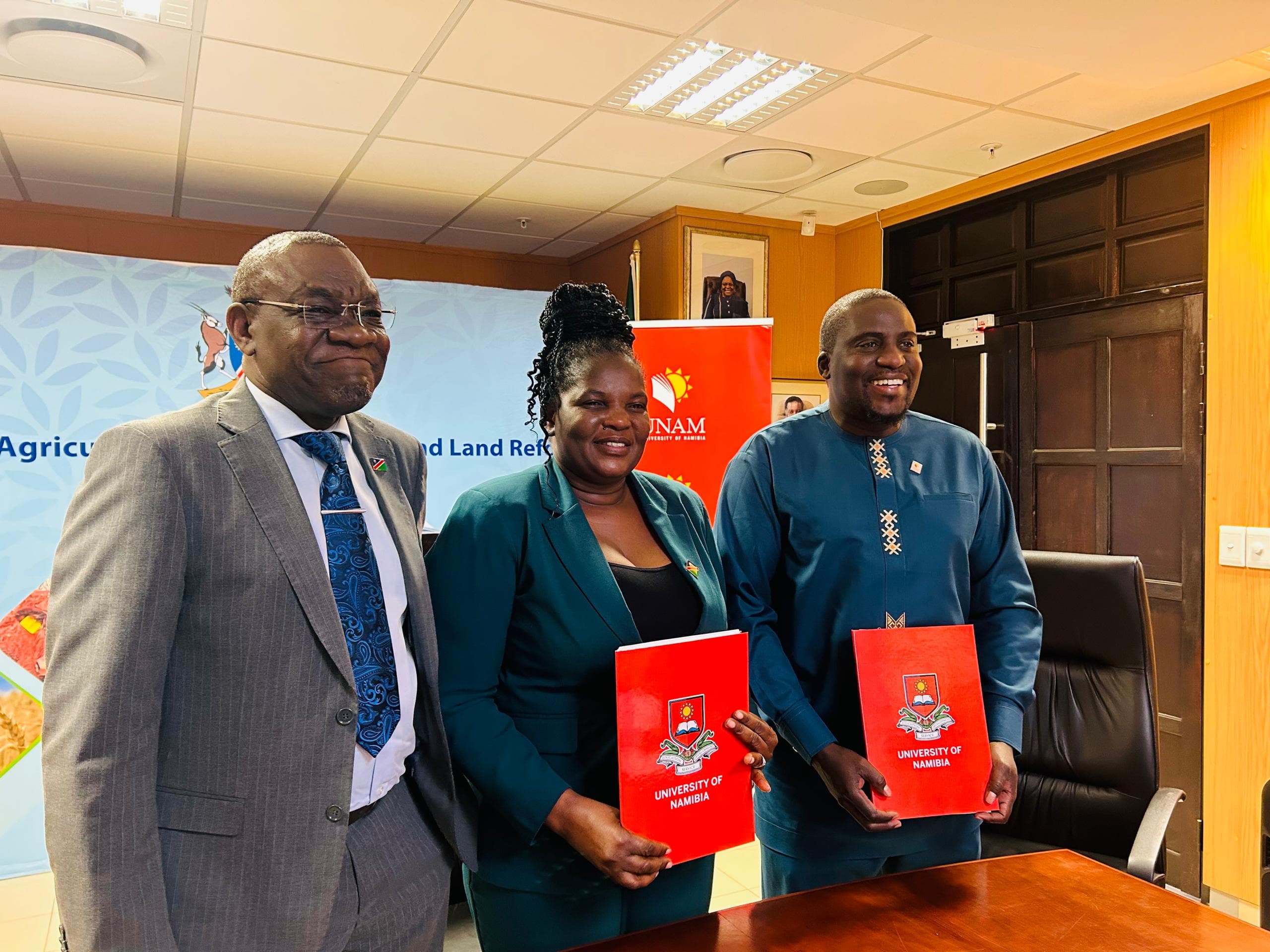
The Ministry of Agriculture, Fisheries, Water and Land Reform and the University of Namibia (Unam) last week signed an agreement in Windhoek.
It aims to strengthen collaboration between the agriculture ministry and Unam in research, knowledge generation, technical expertise and the development of practical solutions.
Unam will provide the agriculture ministry with research findings, policy recommendations, technical advice and innovative solutions that can be considered and implemented where appropriate.
The agriculture deputy minister, Ruth Masake, said research must improve policy, and policy must translate into implementation.
“Our expectation is that this partnership will establish a continuous link between research and government action. Where research identifies challenges, we need recommendations. Where it identifies opportunities, we need practical interventions. Where it proposes innovations, we need to explore how those innovations can be tested and adopted. This is how we can ensure that knowledge generated through our universities contributes directly to national development,” she said.
The deputy minister also underscored how the success of the agreement will depend on the two institutions’ ability to work together, remain committed and ensure that the partnership produces meaningful results.
“We are ready to engage with Unam in identifying priority areas of research, sharing relevant information where appropriate, and considering research findings that can strengthen our policies and programmes. Let us work together to ensure that research is relevant, knowledge is shared, innovation is encouraged, and evidence is translated into practical action,” Masake said.
Agriculture employs 70% of the Namibian population, making it the biggest employer in the country.
Under the Sixth National Development Plan, agriculture sits at the centre.
Despite this, Unam vice chancellor Kenneth Matengu emphasised challenges that made it difficult for Namibia to capitalise on the industry.
“Namibia is an arid and semi-arid country. Prolonged El Niño conditions have brought persistent drought. The agricultural workforce is ageing, climate challenges are intensifying, and gaps remain in food and nutrition security.
Given these conditions, we have no choice: we must turn to research and innovation to make agriculture grow even in harsh environments,” said Matengu.
He highlighted why agricultural innovation matters for Namibia.
“Namibian farmers do not need encouragement alone. They need concrete solutions for drought, low soil fertility and scarce water,” he said.
-akaure@nepc.com.na

Comments
No comments yet. Be the first to share your thoughts.